
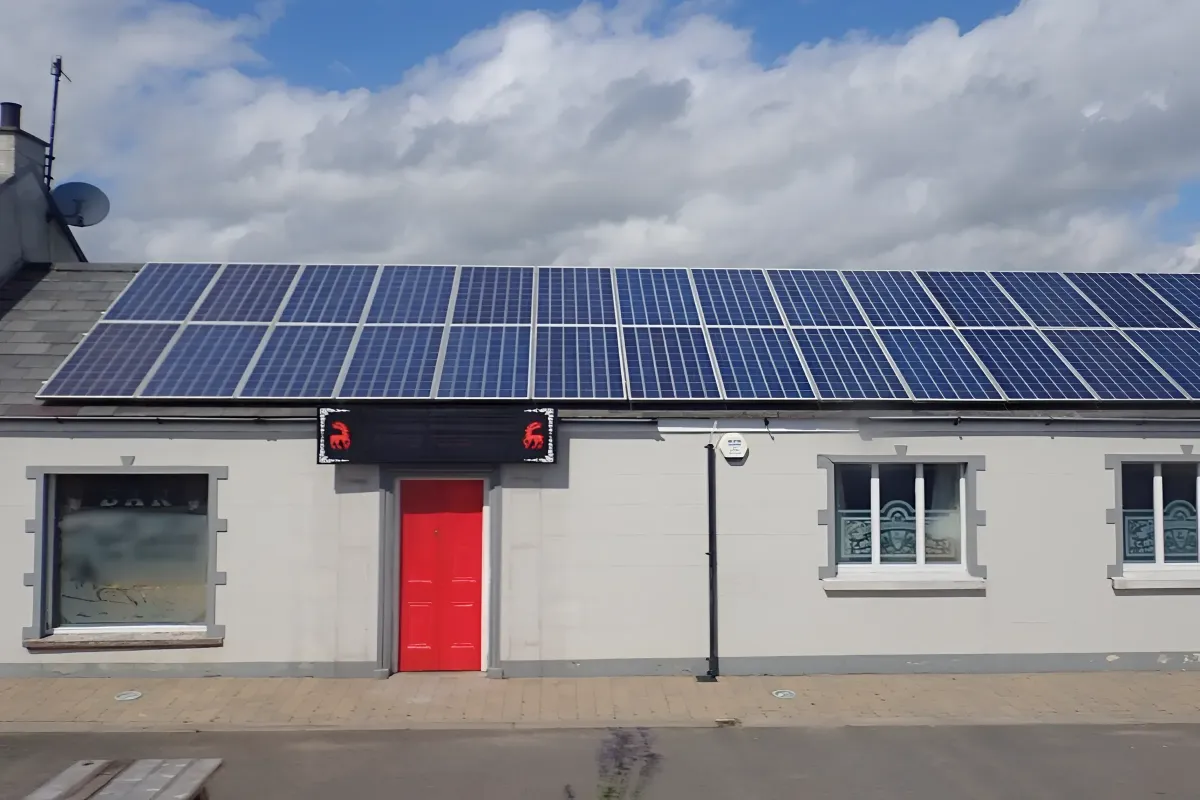
Can Solar Panels Work for my Birmingham Restaurant?
Running a restaurant in Birmingham means juggling tight margins, unpredictable costs, and sky-high energy bills. Between the ovens, fridges, and HVAC systems running all day, electricity can be one of your biggest overheads. So when you hear about solar panels cutting costs, it's natural to wonder if they'd actually work for your place.
Quick take: Yes, solar can work brilliantly for Birmingham restaurants. A typical restaurant uses four times more energy per square foot than most commercial buildings, making solar a smart investment. With a 50 kW system potentially saving over £7,000 yearly, zero VAT on installations, and business rates exemption until 2035, the numbers stack up. The key is matching your system size to your kitchen's load and available roof space, whether that's above your dining room in Edgbaston or over your café in Selly Oak.
Table of Contents
Why Restaurants Are Turning to Solar
How Much a Restaurant Can Save With Solar
Solar System Sizing for Restaurants: From Kitchen Load to Roof Space
Solar Installation Options for Birmingham Restaurants
Incentives, Grants, and Tax Benefits Restaurants Can Use for Solar
Why Restaurants Are Turning to Solar
Energy costs have been brutal lately, and Birmingham restaurant owners know this better than most. Solar offers something rare in the restaurant business: predictability. Once your panels are up, you're generating your own power at a fixed cost. No more bracing for the next price hike or wondering what your supplier will charge next quarter.
The sustainability angle matters too. McDonald's didn't commit to renewable energy powering roughly 8,000 restaurants just for fun. They know consumers notice these things. When you can truthfully say your Sunday roast or morning coffee is partly solar-powered, it resonates with the eco-conscious crowd.
But the real driver is profitability. Solar panels have dropped in price whilst electricity costs have climbed. Add in the UK's generous tax breaks, and you've got a business case that's hard to ignore. Paired with battery storage, solar also gives you backup power during outages, protecting your operation when the grid fails.

How Much a Restaurant Can Save With Solar
Let's talk actual numbers. In the UK, 1 kW of solar typically generates around 850-1,200 kWh per year depending on your location and roof orientation. Birmingham sits comfortably in that range. So a 30 kW system would produce roughly 25-35 MWh annually.
If you're paying 25p per kWh (a conservative estimate for commercial rates), that 30 MWh saves you £6,250-£8,750 each year. Not bad for equipment that'll last 25+ years with minimal fuss.
Real-world examples back this up. Leunig's Bistro installed a 26.4 kW rooftop system producing about 28,000 kWh yearly, covering roughly 53% of their electricity use. Culver's in the US saw a 60 kW solar canopy generate 90 MWh in year one, saving them nearly $11,000.
Here's the catch: your evening dinner rush doesn't align perfectly with peak solar production at midday. Solar generates most power between 11am and 3pm, whilst many restaurants hit their stride from 6pm onwards. This means you'll use solar power for daytime prep, refrigeration, and lunch service, but you'll still draw from the grid during evening peaks.
Battery storage can bridge that gap, letting you store excess midday solar for your dinner rush. The downside? Batteries add £5,000-£15,000 to your upfront cost. Whether that's worthwhile depends on your tariff structure and usage patterns. Even without storage, offsetting 40-60% of your annual electricity use makes a substantial dent. For a Birmingham restaurant burning through 100 MWh yearly, that's £10,000-£15,000 back in your pocket annually.
Solar System Sizing for Restaurants: From Kitchen Load to Roof Space
Getting the size right matters. Start with an energy audit. Pull up a year's worth of bills and calculate your average consumption. A typical full-service restaurant might draw 20-30 kW at peak times, mainly from commercial ovens, walk-in fridges, and HVAC.
Once you know your consumption, think about your roof. In Birmingham, you need roughly 10 square metres of unshaded roof space per kW of solar capacity. Modern panels produce about 400W each and measure around 2 square metres, so a 30 kW system needs 75 panels covering about 150 square metres.
Flat roofs are ideal for restaurants. Most commercial buildings in Birmingham have them, and they're perfect for ballasted solar arrays that don't penetrate your roof membrane. The panels sit on weighted frames, tilted south at about 30 degrees for optimal generation.
Shading is your enemy. Even partial shade from neighbouring buildings can tank your output. A proper site survey identifies these issues. If shade's unavoidable, solar maintenance teams can work around it using optimisers or microinverters.
Structural checks matter too. Solar arrays aren't particularly heavy (about 15-20 kg per square metre), but your roof needs to handle the load safely. Most restaurant roofs manage fine, but older buildings might need reinforcement.
Solar Installation Options for Birmingham Restaurants
You've got three main options for where to put your panels, each with its own trade-offs.
Rooftop installations are the default choice for good reason. You're already paying for that roof space, so you might as well put it to work. Installation costs run lower because there's no need for additional structures. The main limitation is space. Buildings in areas like Ladywood or Erdington often face this constraint, especially older properties with awkward roof layouts or heavy shading.
Solar carports work brilliantly if you've got a customer car park. The panels sit on a raised framework above parking spaces, generating power whilst providing covered parking. Customers appreciate the shade in summer and rain protection year-round. The catch is cost: carport structures run about 30-50% more than simple rooftop mounting. If you run a gastropub in Sutton Coldfield with a decent-sized lot, the extra capacity can be worth the premium.
Ground-mount arrays suit restaurants with adjacent land, perhaps those in suburban areas like Northfield or Hall Green with space to spare. These systems can scale larger than rooftop options, and they're easier to maintain since everything's at ground level. The downsides? You're using land that might otherwise serve customers, and planning permission is almost certainly required.
Many restaurants combine approaches. Panels on the roof for baseline capacity, perhaps a small carport over staff parking, and if space allows, a ground array out back. Your choice really depends on your specific site in Birmingham.
Incentives, Grants, and Tax Benefits Restaurants Can Use for Solar
Here's where UK restaurants catch a break. The government's actually being helpful for once.
Zero VAT is the big one. From April 2022 through March 2027, qualifying solar installations carry 0% VAT instead of the standard 20%. That's an immediate saving of one-fifth of your installation cost. A £40,000 system costs you £40,000, not £48,000. Batteries installed alongside solar also qualify for the zero rate. This isn't a small tax relief. On a typical 50 kW restaurant system costing £50,000-£60,000, you're saving £10,000-£12,000 straight away.
Business rates exemption is equally valuable. Solar and battery storage equipment is explicitly exempt from business rates calculations until 2035. You get all the benefits with none of the ongoing tax burden.
There's also a newer government initiative offering free energy assessments to 600+ hospitality businesses. The programme aims to save participating businesses about £3 million collectively.
Stack all these incentives together and the business case gets compelling. A £50,000 solar installation might cost you £40,000 after VAT relief, save you £9,500 in corporation tax, and generate £7,000+ yearly in electricity savings. You're looking at payback in 4-6 years, with 20+ years of virtually free electricity after that.
Final Thoughts on Solar for Restaurants
Solar makes sense for Birmingham restaurants. The energy intensity of commercial kitchens, combined with current electricity prices and generous UK incentives, creates conditions where solar pays for itself faster than in most other sectors.
Every restaurant's different though. A Yardley café with limited roof space and heavy evening trade will see different returns than a Hodge Hill gastropub with a large south-facing roof and strong lunch business. The fundamentals favour solar, but your specific site and usage patterns determine the exact returns.
The best systems combine solar with broader energy efficiency. If you're still running old kitchen equipment or inefficient lighting, fix those first. Solar works better when you're not wasting the electricity you're generating.
Don't rush the planning phase. Get multiple quotes, insist on detailed shading analysis, and verify all incentive eligibility before signing anything. Check that your chosen installer is MCS-certified (required for VAT relief) and that they understand commercial installations.
The broader energy landscape favours solar. Electricity prices remain high, and policy direction continues pushing towards renewables. Business rates exemption runs until 2035, but there's no guarantee these incentives last forever. The case for solar is strong now; it might be weaker if you wait.
If you're running a restaurant anywhere in Birmingham from Edgbaston to Erdington, from Hall Green to Hodge Hill, solar deserves serious consideration. Have a look at our solar battery storage options to maximise your system's potential, or get in touch to discuss your specific situation.

Solar for Restaurants FAQs
Is solar right for my restaurant?
If you've got high daytime electricity use and suitable roof space, solar will likely save you money long-term. Restaurants consuming over 100 MWh yearly can offset a substantial chunk through PV. Book a site assessment to size a system properly and calculate ROI using your actual tariffs.
How big does the system need to be?
System size depends on your annual consumption and site characteristics. Divide your annual kWh by UK solar yield (850-1,200 kWh per kW installed) to estimate required capacity. Then verify how many 400W panels physically fit on your roof. Most Birmingham restaurants end up with systems between 20-60 kW.
Do I get paid for exporting solar power?
Traditional subsidised export tariffs have ended. Surplus electricity earns a modest market rate (typically a few pence per kWh), so maximising self-consumption makes the most financial sense. Any export revenue is a bonus on top of your savings.
Can I install batteries too?
Batteries let you store excess midday solar for use during evening peaks. This improves self-consumption and can help reduce demand charges. The trade-off is cost: batteries typically add £5,000-£15,000. Size batteries only if your usage pattern and tariff structure make them economically worthwhile.
Will solar damage my roof?
Properly installed solar is non-intrusive. Panels on flat roofs typically use ballasted mounting (weighted frames with no roof penetration). A competent installer ensures your roof warranty remains valid. The panels themselves can actually protect your roof membrane from UV degradation.
What about maintenance?
Solar panels have no moving parts, so maintenance is minimal. Plan to clean panels periodically and monitor system performance. Most panels carry 25-year performance warranties. Inverters typically last 10-15 years before needing replacement (£1,000-£3,000). Our local team's maintenance and repair service keeps Birmingham systems running optimally.
How long is the payback period?
With current incentives, most Birmingham restaurants see payback in 4-7 years. This assumes 0% VAT, capital allowances, and typical commercial electricity rates. After payback, you're generating nearly free electricity for another 18-20 years.
Do I need planning permission?
Most rooftop solar on commercial buildings qualifies as permitted development and doesn't need planning permission. However, if your restaurant is in a conservation area, your building's listed, or you're installing ground-mount or carport arrays, you'll likely need approval from Birmingham City Council.