Is Solar Profitable for Warehouses? - Birmingham
Birmingham's warehouse and industrial sector sits on a goldmine it hasn't tapped yet: its rooftops. If you run a warehouse in and around the city, you're almost certainly spending a significant chunk of your operating budget on electricity: lighting, HVAC, refrigeration, forklifts, the lot. Solar panels can change that picture considerably, and the numbers stack up far better than most Birmingham business owners expect.
Quick take: Yes, warehouse solar is profitable. A typical Birmingham warehouse can cover 40–60% of its electricity use with rooftop solar, with payback in 3–5 years and decades of reduced bills after that. This blog walks through the business case, the savings, the practicalities, and the honest challenges, so you can make a clear-headed decision.
Table of Contents
Why Solar for Warehouses Makes Business Sense
Key Benefits of Installing Solar Panels on a Warehouse
How Much Roof Space Do Warehouses Need for Solar?
Energy Costs, Savings, and Return on Investment
Important Factors to Consider Before Installing Warehouse Solar
Common Challenges and How to Overcome Them
Why Solar for Warehouses Makes Business Sense
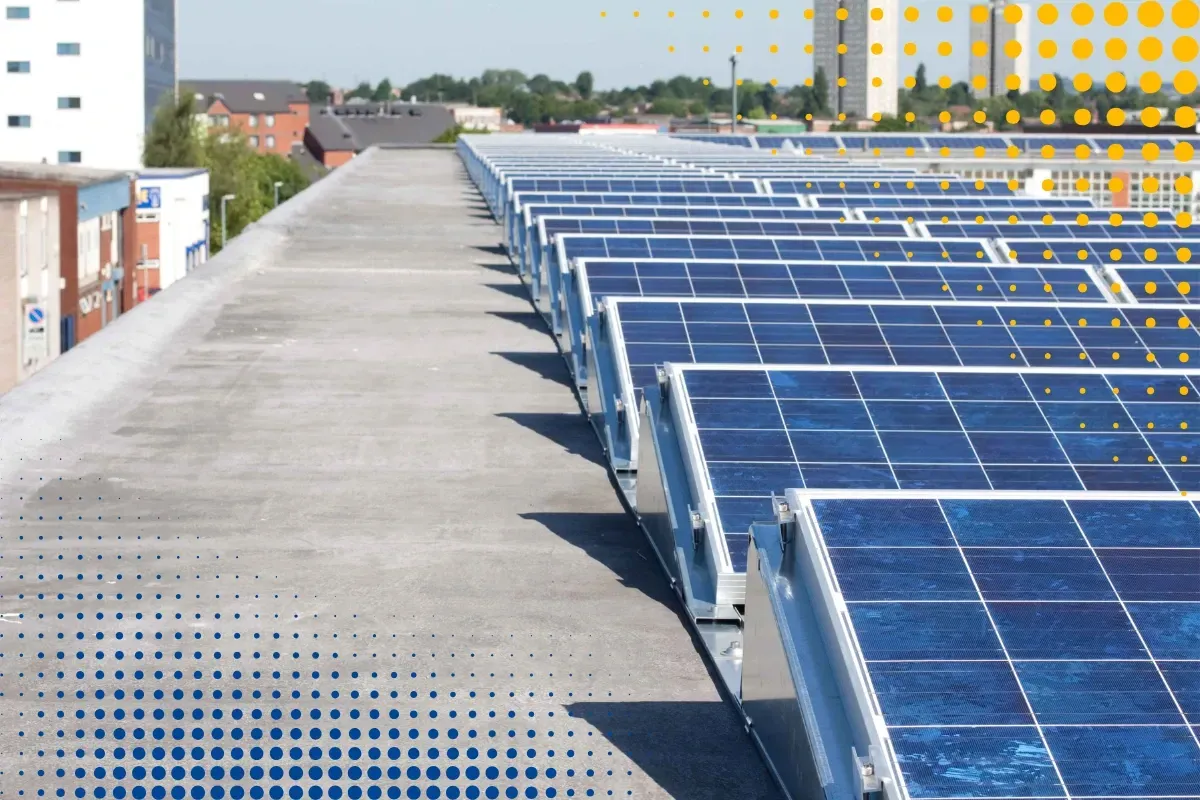
Warehouses are, in many ways, the perfect solar candidate. They tend to have large, flat, unobstructed rooftops with little else competing for the space. They also consume most of their electricity during the day, exactly when solar panels are generating. That alignment between supply and demand is what makes warehouse solar so financially attractive.
Birmingham has a strong and growing warehousing and logistics base, particularly around areas like Erdington, Northfield, and the broader West Midlands industrial corridor. Energy overheads are one of the biggest controllable costs for these businesses. Solar turns a passive roof into an active cost-reduction tool.
There's also the broader business case to consider. Companies with strong sustainability credentials are increasingly preferred by customers, investors, and supply chain partners. Installing solar on your Birmingham warehouse isn't just an energy decision. It's a statement about the direction your business is heading. You can explore how Solar Panels Birmingham approaches commercial solar to get a sense of what that looks like in practice.
Key Benefits of Installing Solar Panels on a Warehouse
Lower Energy Bills
This is the big one. A 100–130 kW solar system, roughly 280–330 panels on around 930 m² of roof, can supply 40–60% of a typical warehouse's electricity. Warehouses use considerable power for lighting, HVAC and equipment, and rooftop solar lets businesses harness free energy from the sun to reduce those costs. At current UK commercial rates of around 21–25p per kWh, that translates to roughly £16,000–£24,000 in annual savings. For larger systems, the numbers scale accordingly.
Unlike grid electricity, sunlight is free. After payback, solar output delivers power at near zero cost for decades. That's a genuine hedge against the energy price volatility that has hit Birmingham businesses hard in recent years.
Solar and battery storage together act as a strategic solution for energy-intensive facilities, reducing overall energy costs and helping businesses avoid expensive peak rate charges.
Stable, Predictable Costs
Grid tariffs go up. Solar output doesn't change based on what the energy market is doing. Locking in a low per kWh cost for 25+ years gives your finance team something they'll appreciate: certainty.
Revenue from Surplus Energy
If your warehouse generates more solar electricity than it uses, you can sell the surplus back to the grid under the UK's Smart Export Guarantee (SEG). It's not a huge earner on its own, but it adds up over time and means you're never wasting generation.
Stronger ESG Position
A 77 kW solar installation saves roughly 11 tonnes of CO₂ per year. For Birmingham warehouses with sustainability reporting requirements or supply chain commitments, that's a meaningful figure. Solar can contribute directly to Scope 1–3 emissions reductions, which is increasingly relevant for businesses working with larger corporate clients.
Better Use of an Underused Asset
Most warehouse roofs do one thing: keep the rain out. Solar makes that same roof an income-generating asset. UK industry estimates suggest warehouse rooftops across the country could hold 10–15 GW of solar capacity, a significant untapped resource sitting above businesses that are still paying full grid prices.
How Much Roof Space Do Warehouses Need for Solar?
A useful rule of thumb: roughly 1 kW of solar capacity for every 7–10 m² of clear roof space. That means a 1,000 m² warehouse roof can typically support a 100–140 kW system, around 280–350 panels, generating somewhere between 95,000 and 133,000 kWh per year under UK irradiance conditions. A qualified installer will size the system by matching capacity to the building's actual load profile and roof specifications.
Each panel takes up approximately 2 m², so the maths is straightforward once you know your usable roof area. A structural survey will confirm what's actually available after accounting for skylights, plant equipment, and access routes.
For Birmingham warehouses with south-facing or near-south roofs, output will be at the higher end of estimates. Flat roofs, which are common across the city's industrial estates, can use ballasted mounting systems that angle panels for better generation without penetrating the roof membrane.
If you're not sure how your site might look, our about page gives a good overview of how we approach commercial assessments.
Energy Costs, Savings, and Return on Investment
Let's get into the numbers, because this is what most Birmingham warehouse operators actually need to know.
UK commercial electricity currently runs at around 21–25p per kWh. Every 100,000 kWh your solar system generates saves you roughly £21,000–£25,000 in grid purchases. A 100 kW system producing around 100,000 kWh per year can therefore cut your electricity bill by £20,000–£25,000 annually.
Installation costs typically run at £800–£1,200 per kW for commercial systems. A 100 kW installation might cost £80,000–£120,000 before any tax relief. With payback in the 3–5 year range, that's a return most investments would struggle to match.
One real-world example worth noting: solar plus storage is a strategic solution for energy-intensive facilities, reducing overall expenses and helping businesses avoid peak rate charges on top of the core bill savings.
For ongoing support and maintenance to protect that investment, our maintenance service is worth exploring early in the planning process.
Important Factors to Consider Before Installing Warehouse Solar
Your Energy Profile
Before sizing a system, understand when and how much electricity your warehouse uses. Solar works best when consumption is concentrated during daylight hours, which is true for most warehousing operations. A good installer will match system capacity to your actual load profile rather than just fitting as many panels as the roof can hold.
Roof Condition and Structure
Modern steel-framed warehouse roofs built after 1990 can typically carry 15–25 kg/m² of panels without structural reinforcement. Older or lighter-built roofs need a survey first. Orientation matters too: south-facing roofs generate the most, but east/west-facing roofs still deliver strong returns.
If your Birmingham warehouse is in Selly Oak, Sutton Coldfield, or Perry Barr, roof age and construction type can vary considerably, so a site-specific assessment is always the right starting point.
Permitting and Grid Connection
Most UK warehouse rooftops fall under permitted development rights, meaning you won't need planning permission. The main exception is listed buildings or conservation areas, which is unlikely for most commercial warehouse sites. However, any installation over 50 kW requires a G99 application to your Distribution Network Operator (DNO) for grid connection. That's a standard step, but it takes time, so factor it into your project timeline.
Common Challenges and How to Overcome Them
Split Incentives for Tenanted Warehouses
If your Birmingham warehouse is rented, there's a common problem: the tenant pays the energy bills, but the landlord owns the roof. Neither side wants to fund the full installation. Green lease agreements or savings-sharing arrangements between landlord and tenant can resolve this, and it's becoming more common as energy costs remain elevated.
Structural Limitations on Older Roofs
Not every warehouse roof can take the load. If yours can't, there are still options: structural reinforcement, or alternatively, ground-mounted solar or solar carports on adjacent land. It's a solvable problem, not a dealbreaker. Businesses in Ladywood, Hodge Hill, and Hall Green with older industrial stock may find this worth checking early.
Grid Connection Delays
DNO applications for larger systems can take months. The fix is early engagement: submitting your G99 application as soon as the system design is confirmed, and working with an installer who understands the local network requirements. Businesses in Edgbaston, Erdington, and Yardley should account for DNO timelines when planning project start dates.
Maintenance Concerns
Solar PV is genuinely low-maintenance. Panels are largely self-cleaning in UK rainfall and carry 25 year performance warranties. That said, an Operations and Maintenance (O&M) contract gives you monitoring, inspections, and fast response if something does go wrong. It's a small cost for significant peace of mind.
Final Thoughts on Solar for Warehouses
Birmingham's warehousing sector has a real opportunity here. The combination of large roof areas, high daytime energy use, strong UK commercial electricity rates, and available financing options makes warehouse solar one of the most straightforward business investments available right now.
The payback periods are short, the savings are real, and the long-term picture is compelling. As one industry observer put it, warehouse solar is a genuine win-win: unused roof space becomes clean energy, bills come down, and the business becomes more resilient. It's hard to argue with that.
If you're based in Northfield or Perry Barr, or anywhere else across Birmingham's industrial belt, the starting point is a proper site assessment. Contact us to find out what your warehouse roof could realistically deliver.

Solar for Warehouses FAQs
Are warehouses suitable for solar panels?
Yes, very much so. Large, flat, unobstructed rooftops make warehouses ideal for solar. Most warehouse operations, including lighting, refrigeration and HVAC, consume power during daylight hours, which aligns well with when panels generate. A well-sized system can cover 40–60% of a warehouse's electricity use, and that figure climbs with battery storage added to the mix.
How many panels will I need?
It depends on your roof size and electricity use. As a general guide, allow roughly 1 kW of capacity for every 7–10 m² of usable roof. A 930 m² roof typically accommodates 250–330 panels (around 100–130 kW). Your installer will size the system properly once they've assessed the site and reviewed your energy bills.
How much will I save, and how long until payback?
With UK commercial electricity at 21–25p per kWh, every 100,000 kWh generated saves around £21,000–£25,000. Most Birmingham warehouse solar projects achieve payback in 3–5 years. Smaller systems can pay back even faster. One UK case study found a 21 kW industrial installation recovered its cost in roughly 2.5 years while generating over 40% of the site's yearly electricity needs.
Do I need planning permission?
Usually not. Most industrial buildings, including warehouses, fall under permitted development for rooftop solar in the UK. Listed buildings and conservation areas are exceptions. For systems over 50 kW, you'll need to submit a G99 application to your DNO, but that's a standard grid connection process, not a planning hurdle.
Should I add battery storage?
Batteries are optional, but they significantly improve the economics for warehouses with evening or overnight loads. With storage, a warehouse can use 60–80% of its solar production on-site rather than exporting surplus at lower export rates. Whether batteries are worth it depends on your usage pattern, so it's worth modelling both scenarios.
How do I maintain a warehouse solar system?
Solar PV is low-maintenance. Panels generally self-clean in rain and carry 25 year warranties. Monitoring systems give you real-time output data. An O&M contract ensures any inverter or wiring issues are caught and fixed quickly. For Birmingham businesses, our maintenance service covers exactly this.
Which areas of Birmingham do you cover?
We cover the whole of Birmingham, including Northfield, Selly Oak, Erdington, Sutton Coldfield, Hall Green, Hodge Hill, Ladywood, Perry Barr, Edgbaston, and Yardley. Contact us to discuss your specific site.


