Is Wind Uplift a Risk for Birmingham Solar Panels?
Most people installing solar panels think about roof direction, shading, and system output. Wind uplift rarely comes up in the conversation, but it should. In Birmingham, where weather can shift quickly and gusts are a regular fixture, the forces acting on a roof-mounted array are very real. The good news? With the right design, the right installer, and the right maintenance routine, wind uplift is a manageable risk, not an inevitable problem.
Quick take: Wind uplift is the upward force created when negative air pressure builds over your solar panels during wind events. It's most intense near roof edges and corners, and it's the reason proper mounting, correct fixing positions, and routine torque checks matter so much. This blog walks through what wind uplift actually is, why Birmingham homes and businesses need to take it seriously, and what best-practice installation looks like in practical terms.
Table of Contents
What Is Wind Uplift and Why Does It Matter?
How Wind Affects Roof-Mounted Panels in Birmingham
The Main Factors That Increase Wind Uplift Risk
Common Mounting Mistakes That Can Compromise Panel Security
Best Practices for Designing a Wind-Resistant Panel System
How Proper Installation and Inspection Help Keep Panels Secure
What Is Wind Uplift and Why Does It Matter?
Wind uplift isn't a complicated concept once you strip it back. When wind moves over a roof surface, it creates zones of lower pressure on top and, in many configurations, higher pressure underneath. That pressure difference produces a net upward force that acts on anything attached to the roof, including your solar panels.
For roof-mounted solar, this matters because panels are large, flat surfaces with exposed edges. They catch wind differently from the roof itself. Under the right conditions, those pressure differences generate suction forces that can loosen fixings, shift clamps, or pull panels free entirely.
The consequences aren't limited to the panels coming loose. Wind-related failures often cascade: a panel that shifts even slightly can compromise the weatherproofing of the mounting points beneath it, leading to water ingress into the roof structure. UK housing guidance has explicitly flagged the rise in wind-induced failures alongside the growth in rooftop solar, noting that systems must resist wind forces and transfer them safely back into the building structure. That's the core engineering requirement, and it's why uplift deserves serious attention from anyone considering solar in Birmingham.
How Wind Affects Roof-Mounted Panels in Birmingham
A common assumption is that wind loads a roof surface evenly. It doesn't. Building aerodynamics are more complex than that, and the implications for solar panel positioning are significant.
When wind hits a building, it separates at the edges and corners, creating vortices that generate concentrated zones of suction. Wind research on rooftop solar consistently shows that the highest peak suctions on flat-roof arrays aren't produced by wind blowing directly at a wall. They're produced by oblique winds, where vortices originating from roof corners drive the most intense pressure zones.
This is why roofs are divided into pressure zones when engineers calculate wind loads. Corner and edge zones receive higher pressure coefficients than central zones, because the aerodynamic forces there are genuinely greater. The same solar array can sit comfortably in the centre of a roof and be under significant stress if repositioned close to the edge, even if nothing else about the installation changes.
For Birmingham properties, whether a semi-detached in Selly Oak, a terrace in Ladywood, or a commercial premises in Sutton Coldfield, where on the roof panels are positioned matters as much as how they're fixed.
The Main Factors That Increase Wind Uplift Risk
Not all Birmingham roofs carry the same wind uplift risk. Several variables combine to determine how much load a solar array will experience.
Location and exposure are the starting point. A property on an elevated, open site in Perry Barr will experience higher peak gusts than a sheltered plot in a dense residential street. Engineers calculate site-specific peak velocity pressure using Eurocode wind action standards, which feeds directly into the forces the mounting system must resist.
Roof geometry is the next major factor. Flat roofs and low-slope roofs tend to produce higher uplift coefficients across larger areas than steeply pitched roofs. Engineering studies on industrial solar panel arrays confirm that array location relative to roof edges is one of the key variables in determining peak wind loads.
Array setback distance is a genuine design variable, not a cosmetic choice. Wind-tunnel research on ballasted roof-mount systems shows that minimum setbacks must be maintained for published pressure coefficients to remain valid. Reduce the setback below the specified minimum and the wind loading assumptions the design was based on no longer apply.
Roof type and mounting method change the failure modes entirely. For metal roof installations specifically, a frequent oversight is attaching mounting brackets to the roof cladding without checking whether that cladding and its fixings can transfer the additional uplift loads back to the main roof structure. UK installation standards require explicit checks on roof-sheet thickness compatibility with bracket screws, and on the adequacy of the cladding-to-structure fixings for the added uplift load.
For Birmingham properties with flat roofs using ballasted systems, a further risk factor is assuming that weight alone is sufficient to hold the array in place. Sliding and overturning must also be designed against, and friction assumptions are governed by UK installation requirements.
Common Mounting Mistakes That Can Compromise Panel Security
Most wind uplift failures trace back to a handful of recurring errors.
Treating wind uplift as a secondary check. Some installations are designed around dead loads without giving wind suction the attention it deserves as a primary design driver. Wind uplift isn't a minor adjustment to the structural calculation. It can exceed the self-weight of the system by a meaningful margin, particularly in edge and corner zones. Studies on wind loads for solar arrays note that avoiding roof critical zones is a core design recommendation, precisely because the forces there are so much higher.
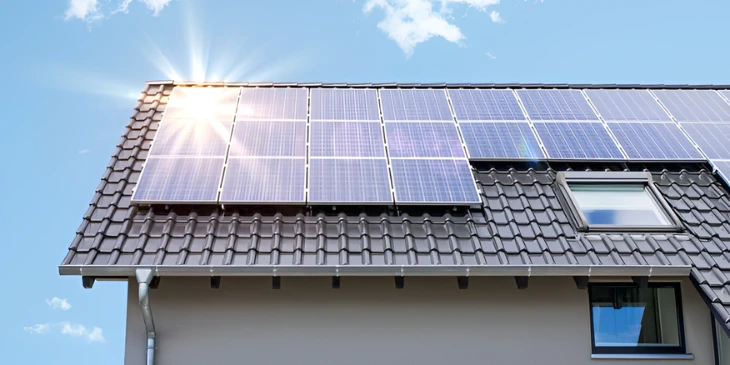
Positioning panels too close to roof edges. UK installation requirements are clear: on domestic roofs, panels should not be mounted within 400mm of any roof edge unless specific additional measures are taken. Those measures include extra fixings and, where existing roof timbers aren't adequate, additional structural support.
Clamp and torque errors during installation. A clamp that isn't tightened to the correct torque setting may feel secure on the day but lose preload over time through thermal cycling and settlement. Once preload is lost, even moderate wind events can shift panels. UK O&M guidance from Solar Energy UK identifies the failure chain directly: inadequately tightened clamps lead to loose modules, which can be blown off in high winds. Homeowners in areas like Erdington or Hodge Hill with older installations are worth having their fixings checked.
Ballasted flat-roof systems without proper sliding design. A ballasted array relies on weight to resist uplift, but also needs to resist horizontal sliding under wind. UK installation requirements set a default friction coefficient of 0.3, unless a higher value is supported by test evidence. Where this is a risk, mechanical restraints such as tethering or kerbs should be incorporated, and a structural engineer may need to confirm the roof can bear the combined load.
Best Practices for Designing a Wind-Resistant Panel System
Getting wind uplift right is a design discipline. Here's what best practice looks like in practical terms.
Use site-specific wind load calculations. Generic rules of thumb are not a substitute for proper wind load analysis. The Eurocode wind actions framework provides a structured method for combining site wind velocity, terrain factors, reference height, and pressure coefficients to arrive at actual forces the system must resist. A certified installer will be working within this framework.
Choose a mounting system with declared wind uplift resistance. UK installation standards require that mounting systems have a declared maximum design wind uplift resistance, derived through defined test and assessment procedures that include partial safety factors. The system's declared resistance must exceed the calculated wind demand at your specific site, installed exactly as tested and specified.
Keep arrays out of edge and corner zones where possible. Where layout constraints mean some panels need to be close to an edge, the design must account for higher loads at those positions, including additional fixings, stronger attachment points, or validated aerodynamic mitigation measures. For flat-roof installations common for commercial properties in Northfield or Hall Green, make sure your installer addresses edge-zone positioning explicitly.
For flat roofs, design for sliding and roof interface. Ballasted systems need friction values that are either tested or conservatively assumed at the UK default of 0.3, compatible slip-protection layers at the roof interface, and structural verification that the roof can carry the combined load. Where standard ballast isn't sufficient, mechanical restraint options should be incorporated.
How Proper Installation and Inspection Help Keep Panels Secure
Good design is only part of the picture. Installation quality and ongoing maintenance are what keep that design performing over the system's lifetime.
UK housing sector guidance is clear: wind-induced failures in rooftop solar trace back to both poor design and poor workmanship. A system that was designed correctly but installed carelessly can fail just as readily as one that was under-designed.
For Birmingham homeowners and businesses, routine solar maintenance visits should include specific checks for wind uplift risk, not just panel output. That means checking mounting systems for any visible shifting or slippage, confirming clamp positions haven't changed, verifying torque settings on clamp fixings, and looking for early signs of corrosion at fixing points.
This matters particularly for older installations. A system installed five or more years ago may not have had its torque settings checked since commissioning. If you're in Edgbaston, Yardley, or anywhere across Birmingham with an older array, a professional inspection is a sensible investment before winter.
If you want your system checked, or you're planning a new installation and want wind uplift addressed properly from the outset, get in touch with our vetted team.
Final Thoughts on Wind Uplift and Keeping Panels Secure
Wind uplift is not a niche concern for exposed coastal sites. It's a fundamental load case for any rooftop solar installation, and Birmingham properties are no exception. Uplift is driven by pressure differences, concentrated in edge and corner zones, and amplified by vortex effects under oblique winds, none of which is visible during a routine inspection of a neatly installed array.
The practical controls are well-established: site-specific wind load calculations, arrays kept out of edge zones where possible, mounting systems with declared wind uplift resistance, correct torque application on installation, and maintenance routines that specifically check for wind uplift precursors.
Wind uplift prevention and roof integrity are inseparable. A fixing that fails under wind load doesn't just risk the panel, it risks the roof beneath it. Whether you're planning a new solar installation or reviewing an existing one, ask your installer directly: has wind uplift been properly designed for?

Wind Uplift and Securing Panels FAQs
What exactly creates uplift on a roof-mounted solar array?
Uplift is generated by net negative pressure on and over the array relative to the pressure underneath it. Eurocode wind action standards handle this through external and internal pressure coefficients applied to peak velocity pressure. The difference in pressure between the upper and lower surfaces of the array produces the upward force that fixings and roof structure must resist.
Why do roof edges and corners get singled out so often?
Because the aerodynamics at edges and corners are more severe than in the central roof area. Wind-tunnel research on rooftop solar shows that the peak suctions driving flat-roof array loading come from vortices originating at roof corners under oblique wind directions. Corner and edge pressure coefficients are correspondingly higher, which is why arrays in those zones need more robust fixing.
Is there a UK rule about keeping panels away from roof edges?
Yes. UK installation requirements state that panels should not be mounted within 400mm of any roof edge unless specific additional measures are taken. Those measures include additional fixings and, where existing roof timbers aren't sufficient to carry the increased load, additional structural support beneath them.
Do ballasted flat-roof systems automatically solve wind uplift?
No. Ballasted systems must be designed against both uplift and sliding. UK installation requirements set a default friction coefficient of 0.3 between the ballasted system and the roof surface, unless a higher figure is evidenced by test data. Where standard ballast quantities aren't sufficient, mechanical restraints such as tethering or kerbs should be incorporated.
What does declared wind uplift resistance mean in practice?
UK installation standards require that mounting systems carry a declared maximum design wind uplift resistance, derived through defined testing and assessment procedures including partial safety factors. The site-specific wind demand must not exceed the declared resistance value, and the system must be installed exactly as it was when tested. Any deviation, such as wrong clamp positions, different fixing patterns, or incompatible components, means the declared resistance no longer applies.
What are the early warning signs that wind uplift risk is growing over time?
Loose clamps or framework, panels shifted out of alignment, and loss of torque preload at fixing points are the key red flags. Solar Energy UK's O&M guidance connects poorly tightened clamps directly to panels being blown off in high winds, and recommends array inspections and torque checks as the primary mitigation. Corrosion at fixing points is also worth watching, as it reduces load capacity gradually. Book a maintenance check if you have any concerns.