
Are Parapet Walls a Hindrance to Solar? - Birmingham
If you've got a flat roof in Birmingham, chances are you've got parapet walls too. And if you're thinking about panels, you might be wondering whether those low perimeter walls are going to cause problems. The short answer? They can create challenges, but they're far from a dealbreaker.
Quick take: Parapet walls can shade panels and limit placement options, but they also offer wind protection and improved rooftop safety. With correct panel positioning, the right mounting system, and modern shading technology, the investment is absolutely viable on a flat roof in the citys with parapet walls.
Table of Contents
What Are Parapet Walls and Why They Matter for Solar
Can You Install Solar Panels on or Near Parapet Walls In Birmingham
Key Design Considerations for Solar on Flat Roofs With Parapet Walls
How Parapet Walls Affect Shading, Panel Tilt, and Energy Output
Mounting Options and Structural Requirements for Solar for Parapet Walls
Cost, Maintenance, and Safety Considerations In Birmingham
What Are Parapet Walls and Why They Matter for Solar
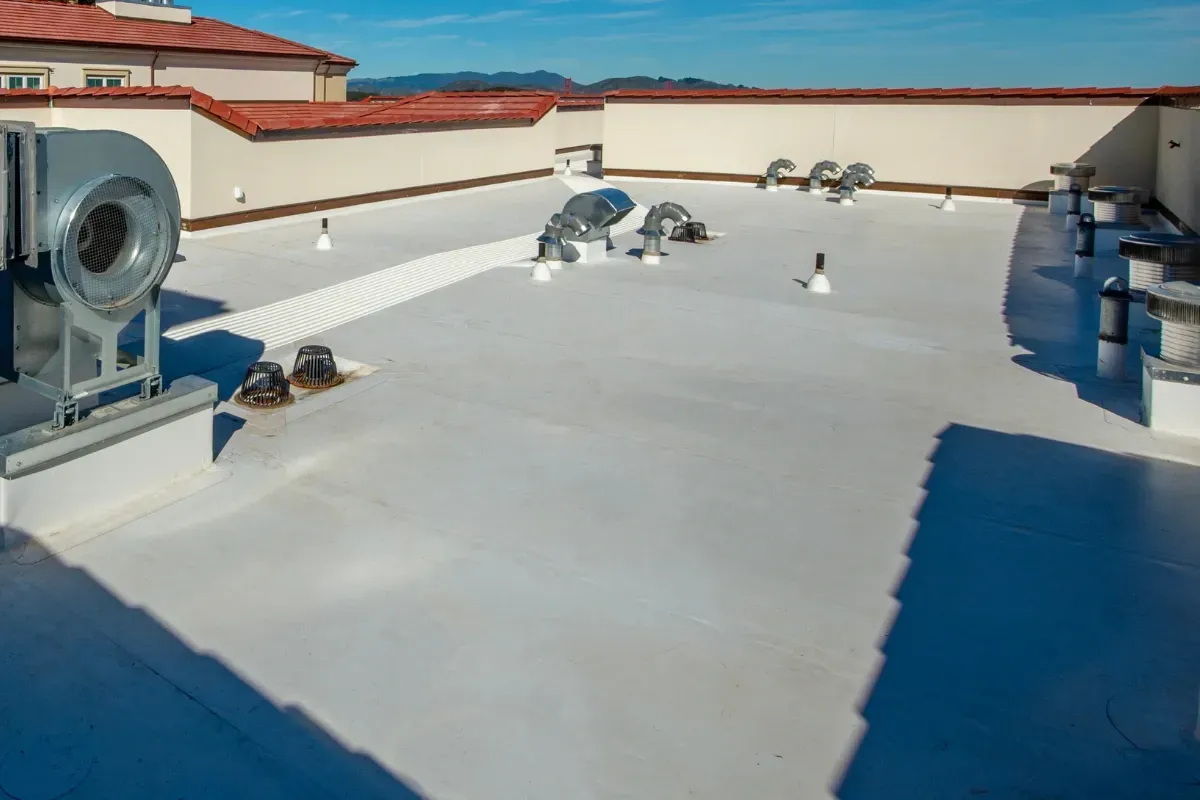
A parapet wall is the low, vertical wall running along the edge of a flat roof, balcony, or terrace. You'll find them on everything from Victorian terraces in Edgbaston to commercial buildings across the city. They prevent falls, assist drainage, provide fire protection between adjoining properties, and help conceal rooftop equipment from street level.
When it comes to PV, they cut both ways. On the plus side, they act as a windbreak, reducing pressure and uplift at roof edges, which makes securing them easier. On the downside, they cast shadows. Even a modest perimeter wall can block sunlight from nearby panels, particularly in mornings, late afternoons, and winter months when the sun sits low. According to this roofing guide, parapets influence everything from safety to drainage to how rooftop equipment is concealed.
In short, they matter for PV because they directly affect panel placement, mounting choices, shading patterns, wind loading, and planning compliance.
Can You Install Solar Panels on or Near Parapet Walls In Birmingham
Yes, you can. Properties in areas like Erdington, Northfield, and Hall Green with flat roofs and parapet walls are fitted with panels regularly, and the results are often excellent.
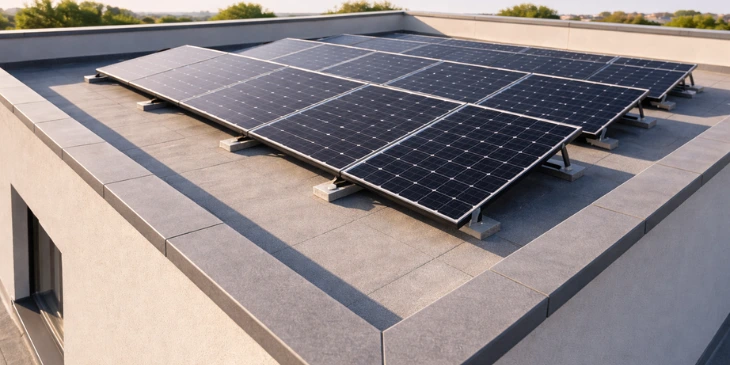
The most common approach is mounting panels on the flat roof surface with adequate setback from the walls to avoid shading. As a rule of thumb, panels should sit 1.5 to 2 times the wall's height away from it. So if your parapet is 1 metre high, keep panels at least 1.5 to 2 metres back.
It's also possible to mount panels using spanning beam systems, where lightweight aluminium beams bridge from one parapet to the other and panels sit on top. This transfers load into the walls and foundation rather than the roof deck. That said, they were not built to carry PV arrays, and you'll need a structural engineer to confirm they can handle the additional forces.
One thing to avoid: bolting racking through the roof surface without proper waterproofing. As this installation advice explains, doing so risks leaks and often falls outside building code. Always use approved methods and ensure any penetrations are thoroughly sealed.
Key Design Considerations for Solar on Flat Roofs With Parapet Walls
Shading and spacing. Parapet walls cast shadows, especially when the sun is low. Maintain a setback of at least 1.5 to 2 times the wall height, and leave around 1 metre between panel rows to prevent row-to-row shading.
Tilt angle. A tilt of 5 to 15 degrees is standard for flat roof systems, balancing energy yield and wind resistance. Going flat at 0 degrees causes dirt build-up; very steep tilts increase wind uplift and row spacing requirements. The flexibility of a flat roof means you can orient panels due south for maximum output or use an east-west layout to spread generation across the day.
Wind loads. A parapet of around 3 feet or more can reduce edge uplift forces on the array, but it's not a substitute for proper wind load calculations. Always follow the racking manufacturer's guidelines.
Structural capacity. Ballasted systems can add 20 to 30 kg per square metre from concrete blocks alone. Have a structural engineer verify the roof can handle the load, particularly on older Birmingham buildings.
Waterproofing and access. Opt for a fully ballasted system wherever possible to avoid roof penetrations. If penetrations are unavoidable, flash and seal them properly. Keep drainage clear. Parapet roofs have internal drains or scuppers that must stay unobstructed. For commercial properties in Ladywood or Hodge Hill, where rooftop equipment is often dense, careful layout planning pays dividends.
How Parapet Walls Affect Shading, Panel Tilt, and Energy Output
Shading is the primary concern. Even shading one cell out of a panel's 36 can cause output to drop by as much as 75% in systems without panel-level optimisers, because shaded cells restrict current flow across the whole string.
In Birmingham, this matters most in winter. Our latitude means the sun sits low from October through March, and a south-facing wall can cast a long shadow across the roof on a December afternoon. A 1 metre high wall could shade the first couple of metres of roof entirely at that time of year.
When some shading is unavoidable, modern technology limits the damage. Panel-level optimisers allow each panel to operate independently, so a shaded panel won't drag down the rest of the system. Grouping panels nearest the wall into separate strings from unshaded panels further in also helps contain any losses.
Panels mounted vertically on the wall face produce around 15 to 25% less annual energy than optimally tilted panels. For most installations in the city, keeping panels on the flat roof surface and clear of the wall line is always the better call.
Mounting Options and Structural Requirements for Solar for Parapet Walls
Ballasted mounting is the most common choice for flat roofs with these walls. Panels sit on racking weighted down by concrete blocks, avoiding roof penetrations entirely. Since the wall reduces wind exposure, less ballast is typically needed. Confirm the roof can handle the added weight before going ahead.
Mechanical (attached) mounting involves anchoring racking directly into the roof structure. This is the route when parapets are low or wind exposure is high. According to this roof overview, attached panelling is often preferred where there are no perimeter walls to reduce wind speed. All penetrations must be flashed and sealed.
Parapet-bridging beam systems span aluminium beams between parapets, lifting panels above the roof surface with zero weight on the roof membrane. Useful for narrower Birmingham properties where roof space is tight, but requires structural sign-off.
Vertical parapet mounts fix panels directly to the wall face. Output is 15 to 25% lower, and studies show panels mounted this way can increase wind stress on the wall by up to 40%. Engineering assessment is essential. Niche use only.
Across all methods: use slip sheets under rack feet, flash any penetrations properly, and don't compromise the wall's coping cap. For a full assessment of your roof, get in touch with the Solar Panels Birmingham team.
Cost, Maintenance, and Safety Considerations In Birmingham
Cost. Flat roof systems in Birmingham cost slightly more than on a pitched roof, mainly due to mounting hardware. For a 4 kW system without battery, expect roughly £6,000 to £7,000, or around £1,250 to £1,500 per kW. Labour on a flat roof is faster than on a pitched roof, which partially offsets the extra kit cost. Factor in any engineer fees if a structural check is needed, and explore the Smart Export Guarantee (SEG) via our battery storage page to understand how surplus energy export can help recoup costs.
Maintenance. Flat roof panels are easier to access than those on pitched roofs. The trade-off is that low-tilt panels accumulate more dirt, so cleaning matters more. Once or twice a year is typically enough in our climate. Professional annual maintenance runs around £100 to £300, covering cleaning, wiring checks, and a performance review. Keep wall gutters and roof drainage clear around panel supports. Solar Panels Birmingham can connect you with maintenance and repair professionals who cover the city and handle flat roof systems.
Safety and planning. Most residential flat roof installations in Birmingham are permitted development. Panels must not protrude more than 60 cm above the roof's highest point and should maintain a 0.5 to 1 metre setback from the edge. These walls help here. Panels sitting below the wall line are hidden from street level, which satisfies planning requirements. Exceptions apply for listed buildings and conservation areas across parts of the city, so check with the council if unsure. A wall of around 1 metre or more can also serve as a guardrail equivalent under UK work-at-height regulations, making maintenance much safer. Older Birmingham buildings sometimes have parapets of only 20 to 30 cm, which offer no fall protection.
Final Thoughts on Solar for Parapet Walls
Parapet walls are not a reason to avoid solar on your Birmingham flat roof. Yes, they cast shadows, and yes, you'll need to set panels back from the walls. But they also protect your array from wind, make the roof safer to access, and help keep your installation within permitted development rules. That's a solid set of trade-offs.
The properties that get the best results are those where an installer has carried out a proper shade analysis, matched the layout to the specific parapet height and roof dimensions, and chosen the right mounting system. The wall height on a Selly Oak semi is not the same as a commercial unit in Perry Barr, and the design needs to reflect that.
Modern microinverters and power optimisers have also reduced the performance gap caused by unavoidable shading. Combined with smart string design and proper setbacks, flat roof systems with these systems perform much closer to perfectly oriented pitched roof systems than most people expect.
If you're thinking about panels for a property in Yardley, Sutton Coldfield, or anywhere across the city, get in touch with Solar Panels Birmingham, and our vetted installers will take a proper look at what your roof can do.
Solar for Parapet Walls FAQs
Can solar panels be mounted on the wall itself, or only on the roof?
It's possible but uncommon. Most installations use racking on the flat roof surface rather than vertical mounts on the the wall. Vertically mounted panels produce around 15 to 25% less energy than optimally tilted panels, and they weren't designed to support PV arrays. Studies show panels mounted this way can increase wind stress on the wall by up to 40%. For most properties in the city, using the roof surface and keeping it as a windbreak is the better option.
How far from a parapet should panels panels be installed to avoid shading?
A good rule of thumb is 1.5 to 2 times the wall's height. For a 1 metre high wall, that means keeping panels 1.5 to 2 metres back. At Birmingham's latitude, winter sun angles are low and shadows from south-facing parapet walls can stretch further than expected in December. Some designers use a setback of 3 times the wall height to account for this. The best approach is a shade analysis from your installer, who can model exactly where sunlight falls throughout the year.
Do parapet walls significantly reduce energy output due to shading?
They can, if not accounted for in the design. Shading one cell out of 36 can cut a panel's power by up to 75% without panel-level optimisers. Modern microinverters and power optimisers largely mitigate this by letting each panel operate independently. A well-designed system avoids parapet shading during peak sun hours, and where some shading is unavoidable, smart string grouping keeps overall performance strong.
Do parapet walls help with wind and storm safety for solar panels?
Yes. They act as a windbreak at the roof edge, disrupting airflow that would otherwise create uplift forces under the array. Where a parapet is around 3 feet or higher, calculated wind uplift on roof-mounted equipment near the edges is reduced, meaning ballasted systems need less weight to stay secure. That said, they reduce forces rather than eliminating them, so the array still needs to be engineered for your site's conditions.
What mounting system is best for a flat roof with parapet walls?
A ballasted racking system is typically the best starting point. The wall reduces wind exposure so lighter ballast blocks can hold the array without roof penetrations. For low walls or exposed sites, a hybrid approach adding a few mechanical attachments provides extra security. Where roof load capacity is a concern, a parapet-bridging beam system transfers load into the building walls instead. Our Solar Panels Birmingham team can advise on the right option after assessing your specific roof.
Is planning permission required for installing panels on a flat roof in Birmingham?
Usually not. Flat roof solar falls under permitted development provided panels don't protrude more than 60 cm above the roof's highest point and maintain a 0.5 to 1 metre setback from the edge. Listed buildings and conservation areas are the main exceptions, and Birmingham has several of these. Check with Birmingham City Council if your property might fall into either category. These walls help your case. Panels sitting below the wall line are invisible from street level, which generally keeps you well within permitted development rules.
How much maintenance do flat roof PV panels need?
Low-tilt panels accumulate more dirt than pitched roof panels, so cleaning matters more. Once or twice a year is enough for most Birmingham properties. Professional servicing runs around £100 to £300 annually and covers cleaning, wiring checks, and a performance review. They make roof access safer for maintenance crews. Keep gutters clear of debris and have the system inspected annually. Solar Panels Birmingham can connect you with local maintenance professionals who cover the whole city for ongoing servicing.