Can You Solar Power Sheds in Birmingham?
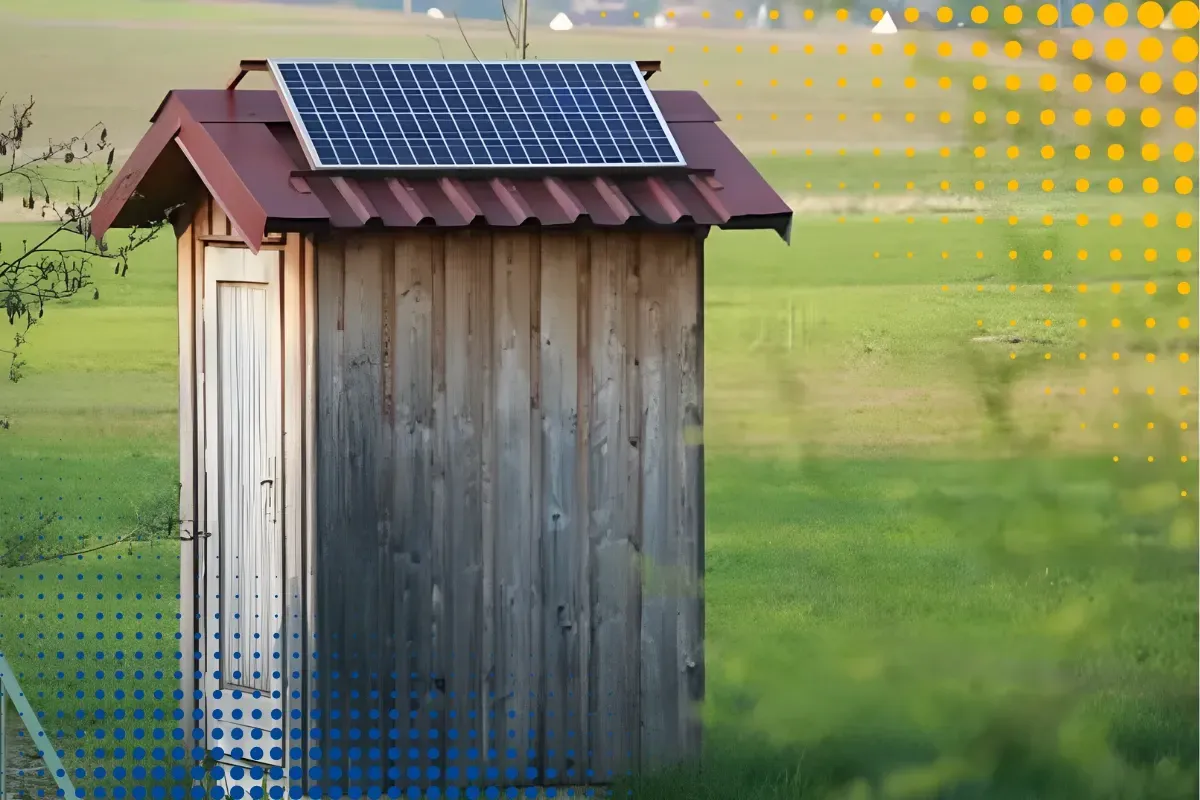
Got a shed sitting in your garden that you'd love to power up? Whether it's a workshop, a home office, or just a space to keep tools with a working light, the answer might be simpler than you think.
Quick take: Yes, you can solar power a shed in Birmingham. Whether you want to run a few lights and charge your devices or power a full home office, the right system comes down to your energy needs, available roof space, and how you connect it. Planning permission usually isn't required, but the electrical work must meet UK regulations. Here's what you need to know.
Table of Contents
What Can You Run on Solar Power in a Shed?
How Many Solar Panels Do You Need for a Shed?
Do You Need a Battery for Shed Solar Panels?
What Type of Solar Panel System Is Best for a Shed in Birmingham?
How Much Does It Cost to Solar Power a Shed?
Can You Solar Power a Shed?
Yes, and it's more practical than a lot of people expect. Solar panels generate electricity from daylight, not just direct sunshine, so they keep working even on the grey days Birmingham is well known for. As long as there's decent light reaching the roof, the structure is sound enough for mounting, and shading is manageable, a shed can absolutely host a system.
South-facing roofs without shade perform best, but east or west-facing options still produce usable power. Partial shade from nearby trees or buildings affects output and needs to factor into the design, but it isn't always a dealbreaker.
Two practical points are worth checking before you go any further. The first is planning. Solar panels on residential property in England are generally treated as permitted development, meaning no application is usually required. Exceptions apply for listed buildings and conservation areas, so a quick check with Birmingham City Council is always worth doing.
The second is electrical safety. Electrical work in garden sheds and garages, including solar PV, falls under Part P regulations. The wiring and connection work must be handled by a registered, competent electrician. The physical mounting of panels might look manageable, but the regulated electrical side isn't something to treat as a casual weekend job.
If the building doesn't currently have its own electricity supply, that's another factor to build into the design and budget from the start.
What Can You Run on Solar Power in a Shed?
The honest answer depends on what the space is actually for. A useful starting point: every appliance draws a certain number of watts. Multiply that by the hours you use it each day and you get your energy use in watt-hours. The smaller the total, the more realistic a compact setup becomes.
Lights, phone chargers, laptops, Wi-Fi routers, CCTV cameras, and similar low-draw devices are well within reach of a small system. Mini fridges are possible, though they run continuously and need careful sizing. The moment you bring in a space heater, kettle, or heavy workshop tools, the demand jumps sharply and a compact setup won't stretch that far.
How Many Solar Panels Do You Need for a Shed?
There's no single answer. Panel count depends on four things: how much energy the space uses daily, how much usable roof area you have, which direction the roof faces, and how much shading it gets.
For context, a standard UK domestic installation typically sits at around 3.5 kWp, using roughly six to twelve panels across 10 to 20 square metres of roof. That's a useful benchmark because it shows just how much smaller most shed projects are. A space running lights and device charging might only need one to three panels. A more ambitious setup, like running refrigeration or a home office, will push the count higher.
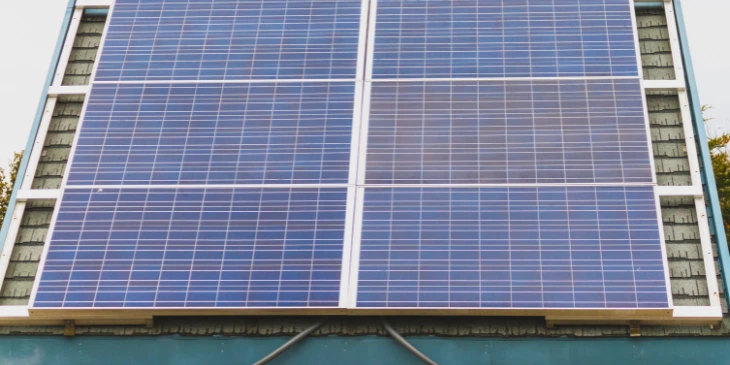
For many Birmingham properties, available roof space becomes the real constraint before energy demands do. If the roof is compact, area limits you before appetite does. Start by estimating your daily energy needs, then see how much roof you're working with.
Our vetted local installers can size everything properly from there. Get in touch to arrange a quote.
Do You Need a Battery for Shed Solar Panels?
Not necessarily. It depends on when you use the space and how it connects to your property.
If the system ties into your main property's grid supply, the grid covers you when panels aren't generating. A battery in that case is optional, not essential. You'll run on solar during the day and draw from the grid after dark or on duller days.
For an off-grid setup, the picture changes. Without a grid connection, a battery and charge controller are what allow the system to store energy for use later. Without storage, you're limited to daytime-only use.
It's also a financial decision. Adding a battery raises the upfront cost, and if you're only ever in the space during daylight hours, the case for one weakens considerably. If you want evening use or full independence from the grid, though, storage makes the whole thing far more practical. Our solar battery storage page covers the options in more detail.
What Type of Solar Panel System Is Best for a Shed in Birmingham?
There are three system types to consider. The right one depends on your use case, not just your panel count.
An off-grid system is the most self-contained option. It uses a battery and charge controller to store what the panels produce during the day for use whenever you need it. It's the natural choice when running a cable from the main property isn't practical or cost-effective.
A grid-connected system links to the property's existing mains supply. When generation dips, the grid fills in. It's the most straightforward route for outbuildings already wired up, and it opens the door to Smart Export Guarantee payments if the system meets the eligibility requirements.
A hybrid setup combines the two. You get solar during the day, stored power in the evening, and the grid as a backup. It's the most flexible option, though it brings the highest upfront cost and compliance requirements.
All three system types require Part P-compliant electrical work. Grid-connected and hybrid setups also need to be registered with your local Distribution Network Operator. Our vetted installers cover all of this across Birmingham, whether you're in Erdington, Selly Oak, or Sutton Coldfield.
How Much Does It Cost to Solar Power a Shed?
Costs vary depending on the system type and how involved the installation turns out to be.
A standard domestic installation in the UK usually runs at around £6,000 to £7,500 for a roughly 3.5 kWp system. That's a useful benchmark, but shed projects don't scale down at the same rate. Labour, mounting hardware, and wiring carry fixed costs that don't shrink in proportion to panel count. A small off-grid kit costs considerably less than a fully installed, grid-connected array on a larger outbuilding, but even modest projects carry those base costs.
Battery storage is a separate consideration. On average, adding a battery to a setup in the UK costs somewhere in the region of £5,000 to £8,000, depending on capacity and type. For a smaller project, that can easily match or exceed the cost of the panels themselves, so it's worth deciding whether you genuinely need it before committing.
Two things work in your favour here. Installations and battery storage are currently zero-rated for VAT in the UK, a policy that runs until March 2027. And if your system is grid-connected and MCS-certified, Smart Export Guarantee payments can improve the long-term returns.
For a quote tailored to your situation, our accredited installers cover Birmingham from Northfield and Perry Barr to Hall Green, Hodge Hill, Ladywood, and Yardley.
Final Thoughts on Solar Panels for Your Shed
Solar panels on a Birmingham shed are entirely realistic, but the right approach always comes back to what the space actually needs to run and what kind of system fits your property.
For lighter loads like lighting, device charging, and occasional electronics, a compact setup is a straightforward and cost-effective project. For heating, cooking, heavy tools, or grid export, you're looking at a more involved installation with a larger budget and more compliance steps to work through.
Start with your energy needs. Check your roof space. Then let a qualified local installer give you a proper picture.
Solar Panels Birmingham connects homeowners and businesses with vetted local installers across the city, from Edgbaston to Sutton Coldfield. Get in touch and we'll connect you with the right installer for the job. For ongoing support once everything's up and running, our solar maintenance and repair service has you covered.
Solar Power for Your Shed FAQs
Do solar panels still work on cloudy days in the UK?
Yes. Panels generate electricity from daylight, not just direct sunshine. Output drops in duller conditions, but they keep generating. Birmingham gets enough daylight year-round to make solar worthwhile, even in winter.
Do I need planning permission for solar panels on my shed?
Usually not. Solar panels on residential property in England generally qualify as permitted development, so no planning application is needed. Exceptions apply for listed buildings, conservation areas, and certain local conditions. A quick check with Birmingham City Council covers you if you're in any doubt.
Can a small shed system run a heater or kettle?
Not typically. Space heaters and kettles each draw around 1,500 watts, far beyond what a compact setup is usually sized for. These systems work best with lights, chargers, routers, and similar low-draw appliances.
Can I power my shed without a battery?
Yes, in some cases. If it connects to your main grid supply, the grid covers you when generation is low. A space that's only used during daylight hours doesn't always need storage.
Can I earn money from shed-mounted solar panels?
Potentially. If the system is grid-connected, MCS-certified, and meets Smart Export Guarantee eligibility requirements, you can receive payments for electricity exported to the grid. A purely off-grid setup with no export won't qualify.