
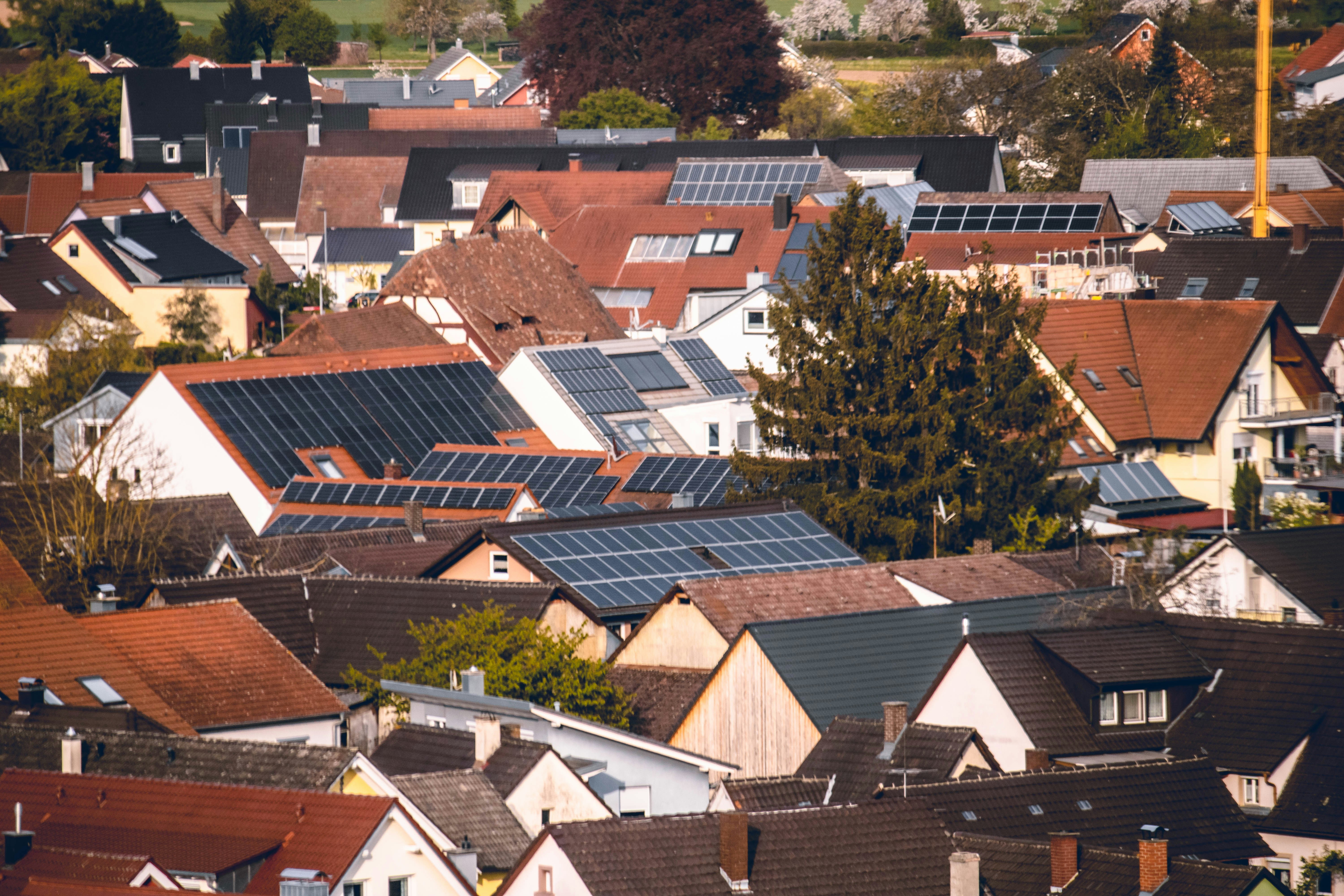
Do Solar Panels Add Value to Your UK Home?
We Analysed 16,370 House Sales to Find Out
If you have looked into solar panels for your home, you have almost certainly been told they add value to your property. It is one of the most common reasons people give for going ahead.
We used to tell people the same thing. It was written right here on this site.
So we decided to stop repeating it and actually check it, against the real sale prices of homes across England and Wales. What we found changed our mind, and we have updated what we tell homeowners because of it.
The Short Answer
We could not find any measurable boost to sale price from having solar panels.
Looking across 16,370 matched home sales in 336 local authorities, homes with solar panels did not sell for meaningfully more than near-identical homes without them. The most a premium could plausibly be, on our numbers, is £3,092. That is under 1% of a typical home's price, and it is less than the panels cost to fit in the first place.
In plain terms: solar panels are a genuinely good investment for your energy bills. They do not appear to be an investment in your home's resale value.
How We Checked It
The honest way to answer "do solar homes sell for more" is not to ask estate agents or repeat what the industry says. It is to compare like with like, using real sales.
That is what we did. We took two official government datasets:
HM Land Registry Price Paid data, which records the actual sale price of every home sold in England and Wales.
Energy Performance Certificates, the official record that shows, among other things, whether a property has solar panels fitted.
We then paired up homes. Every home with solar panels was matched to a home without panels that was as similar as possible: same area, same property type, same age, same size (within 10%), and sold in the same year. A 1930s semi with panels was compared against a 1930s semi of the same size on the same sort of street without them.
Line those thousands of pairs up, compare the sale prices, and you get a clean read on what the panels are actually worth at sale. Nothing else about the two homes is meaningfully different, so any price gap is down to the solar.
We fixed the entire method in writing before we looked at a single result, so there was no chance of nudging the approach until it gave a flattering answer. The full specification is at the bottom of this page for anyone who wants to check our working.
What the Numbers Actually Said
Across all 16,370 pairs, our best estimate of the solar premium came out at £1,431. That sounds like a small boost, but here is the important part: the result is statistically indistinguishable from zero. The margin of error runs from minus £229 to plus £3,092, which straddles zero comfortably. In other words, we cannot say with confidence that the true figure is anything other than nought.
Two further checks pointed the same way:
Solar homes sold higher in 50.3% of pairs. That is a coin toss.
Bigger solar systems did not sell for more than smaller ones. If panels genuinely added value, you would expect more panels to add more value. They did not.
What we can say firmly is what the data rule out. Any resale premium above £3,092 is not supported. The larger claims you sometimes see, that solar adds 2% or 4% to a home's value, are well outside what our numbers allow. For a typical home, a 4% boost would be over £13,000, and there is no sign of anything remotely that size.
What This Means if You Are Thinking About Solar
It means you should judge solar on the thing it genuinely delivers: your energy bills.
A typical 3.5 kW system on a UK home saves around £402 a year on electricity, plus roughly £148.75 through the Smart Export Guarantee for the power you send back to the grid. That is about £550 a year, every year, for decades. Over the 25-year-plus life of a good system, that is real money, and it is the honest reason to fit solar. You can see the full breakdown on our solar savings guide.
What you should not do is pay for panels expecting to get that money back when you sell. On the evidence, you very likely will not.
Why a Solar Company Is Telling You This
It is a fair question. We connect homeowners with local solar installers, so on the face of it, "solar might not add resale value" is not the most convenient finding for us to publish.
We are publishing it because it is true, and because we would rather tell you straight than sell you a myth. We genuinely believed solar added value to a home, enough to say so on our own website. When our own analysis said otherwise, we changed the site and wrote this instead. If a company will not correct itself when the evidence is in front of it, nothing else it tells you is worth much.
Solar is still worth it. Just for the right reasons.
What This Study Can and Cannot Tell You
In the interest of being straight about it:
This compares real sales, but it is an observational study, not a controlled experiment. We have matched homes as tightly as the data allows, but no match is perfect.
We can rule out a large premium with confidence. We cannot completely rule out a small one, somewhere below £3,092. What we can say is there is no sign of the big uplifts that are often claimed.
The certificates tell us whether a home has panels, not the exact age or quality of every system.
We looked at sale price only, not how quickly homes sold.
None of that changes the headline. If solar added the kind of value it is often credited with, a study this size would have found it. It did not.
The Method, in Full
For anyone who wants to check our working.
Question. Do homes with roof-mounted solar PV sell for more than comparable homes without it?
Data. Energy Performance Certificates (Ministry of Housing, Communities and Local Government) and HM Land Registry Price Paid data. England and Wales. Standard residential sales completed 2021 to 2025 inclusive.
Sample. 16,370 matched pairs across 336 local authorities. Each sale was linked to its most recent Energy Performance Certificate dated before the sale. Solar is defined as a recorded photovoltaic supply greater than zero on that certificate.
Matching. Exact match on postcode sector, property type, built form, construction age band and sale year, with a floor area caliper of plus or minus 10%. One non-solar control per solar home, nearest on floor area, without replacement.
Result. Mean within-pair price difference of £1,431, with a 95% confidence interval of minus £229 to plus £3,092. The interval includes zero, so the finding is reported as no detectable premium, with an upper bound of £3,092 (0.90% of the mean sale price). The method was fixed before any result was examined.
Contains HM Land Registry data © Crown copyright and database right 2026. This data is licensed under the Open Government Licence v3.0. Contains public sector information licensed under the Open Government Licence v3.0.
Thinking about solar for your home? Get a free, no-obligation quote from a vetted local installer and find out what you could save on your bills.