How Shading Affects Solar Output - 2026 Birmingham
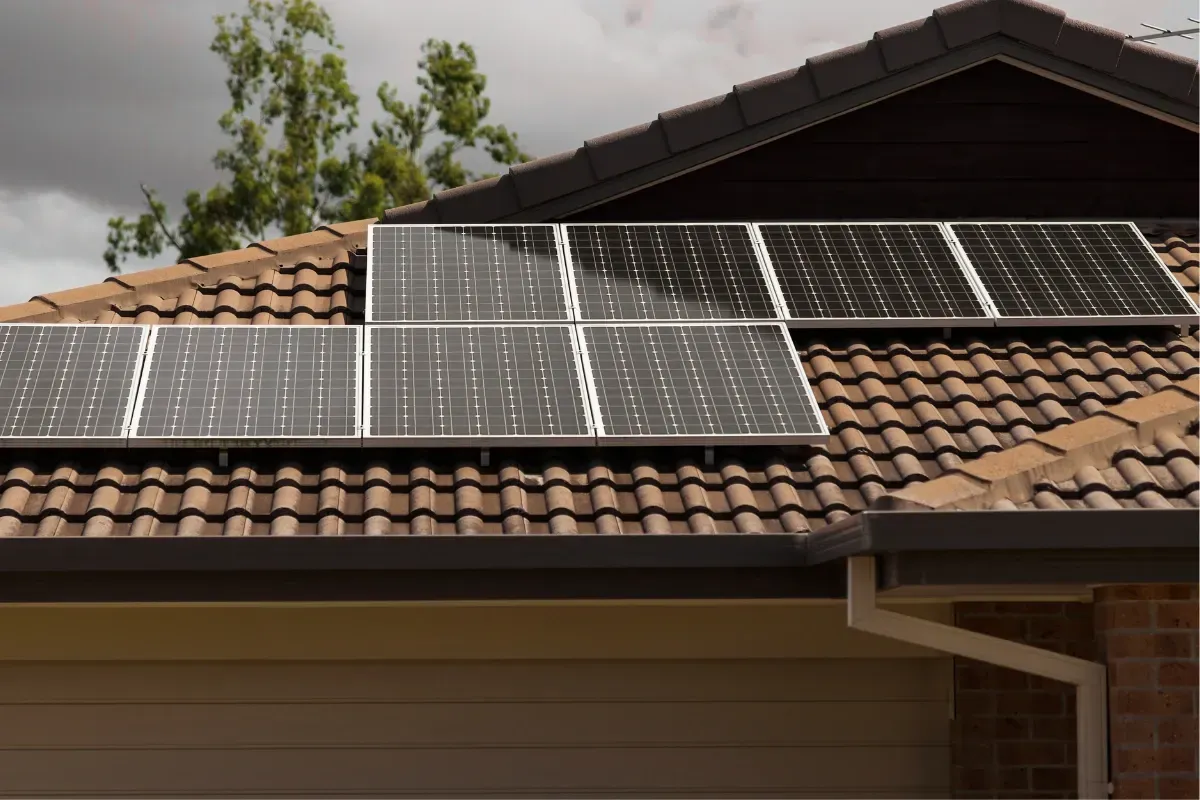
You've probably heard that panels need sunlight, but what happens when part of your Birmingham roof sits in shadow? Even a small patch covering just 3% of a panel can slash output by up to 75%. Shadows from chimneys, trees, or neighbouring properties can drag down your entire system's performance.
Quick take: Birmingham's low winter sun creates long obstructions that impact solar output. Modern solutions like microinverters, power optimisers, and smart panel placement help you generate strong returns. This guide explains how obstruction affects panels and what you can do about it.
Table of Contents
How Shade and Shadows Affect Solar Performance
Partial Shade vs Full Shade: What Changes on Real Roofs
Why Shade Hits Hard on String Systems (the "Weakest Link" Effect)
How to Assess Shade on Your Roof
Bypass Diodes: Advantages and Limitations
Solutions for Shaded Roofs: Microinverters vs Optimisers vs String Inverters
How Shade and Shadows Affect Solar Performance
Solar panels thrive on direct sunlight. Recent reports found that blocking just one cell out of 36 (roughly 3% of a panel's surface) can reduce power output by up to 75%.
Solar cells in a panel are wired in series, like links in a chain. When one cell gets obstructed, it becomes the weakest link, limiting current flow. Think of it like a blocked pipe: one clogged section restricts water flow through the whole system.
Real world data confirms these losses. Even partial obstruction from tree branches, chimneys, or overhead wires can reduce a typical home system's annual energy yield by around 5 to 25%. When one panel produces less current, it drags down the entire series circuit.

Shade and Shadows in the UK
Birmingham properties face unique obstruction challenges due to our climate. The biggest factor is seasonal sun angle. In winter, the sun stays much lower in the sky, causing objects to cast longer obstructions. A tree or building that doesn't obstruct panels in summer could still cast a long obstruction in January.
Historic England notes that in winter the sun is much lower in the sky, which may cause issues with far obstruction. Installers must assess both near and far obstacles that could cast obstructions at different times of year.
Common Birmingham building features introduce obstruction challenges. Chimneys on Victorian terraces in Edgbaston, dormer windows in Erdington, neighbouring houses in Hall Green, and tall trees create sharp obstructions on rooftops.
UK installation standards under the MCS scheme require a formal obstruction assessment for every solar installation. Installers quantify the percentage of annual sunlight lost and derive a "Shade Factor." For example, a Shade Factor of 0.90 means 10% annual energy loss.
Here's something surprising: obstruction can matter more than orientation. A south facing roof heavily covered part of the day may generate less energy than an east or west facing roof with full sun. Eliminating obstruction is often more critical than having perfect south orientation.
Professional site surveys map shadow patterns at different hours and seasons, then design arrays to avoid problematic areas. When shadow is unavoidable, installers recommend microinverters or power optimisers.
Partial Shade vs Full Shade: What Changes on Real Roofs
Not all shadow is equal. Partial shadow refers to situations where a panel is only partly in shadow, for example, a small corner covered by a tree branch. Full shadow means an entire panel is completely dark.
On real Birmingham roofs, partial shadow is far more common. Think of dappled light through leaves or the edge of a dormer casting shadow. When a panel is partially obstructed, some sunlight still reaches unblocked cells, so the panel continues producing power at reduced levels.
In contrast, complete shadow is far more damaging. That panel will produce little to no energy whilst fully dark.
Modern panel design has improved shadow tolerance. Most PV modules use techniques like half cut solar cells and multiple bypass diodes to localise shadow effects. In older panels, blocking one cell in a series string could knock out that entire string. Today's panels often split cells into independent substrings.
For instance, half cut cell panels are wired as two sections in parallel. If the top half is obstructed, the bottom half can still generate at full power. The key takeaway: partial shadow allows some continued production with losses, whereas full shadow halts production entirely.
Why Shade Hits Hard on String Systems (the "Weakest Link" Effect)
Traditional solar installations wire panels together in series strings. A covered panel can severely drag down performance of all other panels in its string. This is often called the "Christmas lights effect" or "weakest link effect."
Just as one bad bulb in old Christmas lights could make the whole string go dark, one underperforming panel throttles the entire series string. In a series circuit, current is constant through all components. A blocked panel that produces less current forces that lower current upon every panel.
All the other panels might be capable of generating 8 amps in full sun, but if one solar panel can only generate 4 amps because of coverage, the string's current is limited to 4 amps. Every solar cell is like a link in a chain. The covered cell is the weakest link.
At the module level, if one module in a series string is obstructed, it can bring down power output significantly. There are ways to partially mitigate this. Grouping panels with similar shadow patterns on their own strings helps. That way, an unobstructed string runs at full power whilst only the covered string is affected.
How to Assess Shade on Your Roof
It's crucial to assess how much obstruction your roof gets before installing panels. Shade assessment involves figuring out when and where obstructions fall throughout the year.
Professional solar installers perform a site survey with obstruction analysis as routine. They'll use tools like a solar pathfinder, SunEye, or 3D modelling software to predict the sun's path and obstructions for each month.
They also consider seasonal obstruction changes. For example, a tall tree to the south might not cast obstruction in summer when the sun is high but could significantly obstruction the roof in winter.
For homeowners wanting to gauge roof coverage, observe your roof at different times of day, especially around 9 AM, noon, and 3 PM. Also consider different seasons.
Solar panels should ideally receive full sun from late morning through early afternoon. These are peak solar hours. A little obstruction very early or late has less impact, whereas obstruction during midday hours causes bigger losses.

Bypass Diodes: Advantages and Limitations
One fundamental technology helping panels cope with shadows is the bypass diode. Bypass diodes are small one way electrical valves wired within a solar module that allow current to skip over covered or damaged cells.
In a standard solar panel, groups of cells (typically 18 to 24 cells per group) are each protected by a bypass diode. If cells in that group become covered and start impeding current, the bypass diode conducts and routes electricity around that group. This prevents covered cells from acting like a roadblock.
Primary advantages are safety and continued power production. From a safety standpoint, a covered cell can overheat, but a bypass diode prevents this. In terms of power, bypass diodes ensure unobstructed portions can continue producing energy.
However, bypass diodes come with limitations. When a diode activates and bypasses a group of cells, output from those cells is lost. For example, in a 60 cell module with 3 diodes (each protecting 20 cells), if one set of 20 cells is heavily obstructed, its diode bypasses that section.
So whilst the solar panel isn't completely dead, its maximum power is reduced proportional to the fraction bypassed.
Solutions for Shaded Roofs: Microinverters vs Optimisers vs String Inverters
When it comes to inverter technology, there are three common setups: traditional string inverters, power optimisers, and microinverters. For obstructed roofs, the choice makes a big difference.
String Inverter: A single central inverter handles a whole string of panels. Solar panels are linked in series. In this setup, obstruction on one solar panel can affect the whole string's output. However, many modern string inverters now offer multiple MPPT inputs or have algorithms to cope better with obstruction. The upside is simplicity and cost effectiveness.
Microinverters: Microinverters are tiny inverters mounted on each solar panel. Each converts DC to AC right at the panel with its own MPPT. The huge advantage is independence: each solar panel operates on its own. If one solar panel is obstructed, it has no effect on other panels.
The obstructed solar panel's microinverter harvests what it can, whilst neighbouring panels' microinverters squeeze full power out of those panels. This makes microinverters extremely effective for roofs with partial or irregular obstruction. They eliminate the weakest link issue.
Case studies show that in environments with frequent partial shadow, systems with microinverters produced about 5 to 10% more energy than comparable string systems. In heavy shadowy conditions, gains can reach 17% annual increase.
Power Optimisers: Optimisers are devices installed at each solar panel that perform MPPT at panel level and feed conditioned DC power to a central string inverter. In a obstructed scenario, an optimiser adjusts the obstructed solar panel's voltage and current to maximise output without dragging down others.
The advantage is similar to microinverters: if one solar panel is obstructed, optimisers ensure the rest aren't held back. Optimisers are generally less expensive than microinverters whilst giving most panel level benefits.
Testing indicated about a 5% gain in partially obstructed conditions with optimisers versus a traditional string setup. A heavily shaded or complex roof will usually benefit most from microinverters or optimisers.
A traditional string inverter can work if shadows is minimal or only during off peak times. Modern string inverters with multiple MPPT inputs can handle two sub arrays (perhaps one east facing, one west facing in areas like Hodge Hill or Ladywood) reasonably well.
In Birmingham, installers lean towards microinverters or optimisers if shadows is unavoidable. The choice often comes down to economics and obstruction severity. For a roof with significant shadow issues, the investment is usually justified by energy gains.
It's always a case by case decision best made in consultation with a solar professional.
Final Thoughts on Solar Panels in Shade
Shade is the solar panel's nemesis, but it's a challenge managed with careful planning, smart technology, and occasionally pruning shears. Even a little obstruction can have big impact, so it's crucial to identify and minimise blocking wherever possible.
Start with a good site assessment. Know where shadows come from and when they occur. In Birmingham with our low winter sun, be extra mindful of long seasonal shadows. Whenever feasible, design your solar panel layout to stay in sunshine during peak hours.
Thanks to modern advancements, having some blocking on your roof doesn't mean you can't go solar. Technologies like bypass diodes, microinverters, and optimisers substantially reduce downsides. Bypass diodes ensure shadows on part of a solar panel don't take out the whole panel or string. Microinverters and optimisers allow obstructed panels to be isolated so the rest of the system runs strong.
That said, these solutions aren't magic. Any power from the sun that's physically blocked will be power not generated.
For residential and commercial solar projects across Birmingham, from Northfield to Perry Barr, Selly Oak to Sutton Coldfield, and Yardley, it often comes down to cost benefit analysis. If a tree is heavily blocking the array, is it worth trimming or removing?
In many cases, investing more upfront in mitigation can yield significant gains and avoid long term energy loss hurting your ROI. There's also long term perspective: blocking tends to increase over time from growing trees.
In summary, panels and blocking don't mix well, but with the right approach, they can coexist. Ideally, you eliminate blocking through site selection and design. When you can't, you mitigate it with technology and maintenance.
Armed with that knowledge, Birmingham homeowners and businesses can make informed decisions to get the most from solar installations. If you're ready to explore solar for your property and want expert guidance on managing shade, get in touch with our vetted team or learn more about their battery storage solutions and maintenance services.

Solar Panels in Shade FAQs
Do panels work in the shade?
Yes, panels will work with partial shadow, but output is greatly reduced. Solar panels produce most power in direct sunlight. In shaded conditions, panels generate only a fraction of potential.
If you have a traditional string inverter, one shaded solar panel can drag down performance of other panels in the same string. However, with the right system design using microinverters or optimisers, a shaded solar panel's impact can be isolated.
Solar panels don't generate power in complete darkness (at night or if completely shaded), but they can generate some electricity under diffuse light such as cloudy sky. Just keep in mind more shade means less energy. Ideally, panels should be in direct sun for the majority of the day.
Are there shadow tolerant panels or special panels for shadowy areas?
There's no solar panel immune to shade. If sunlight isn't reaching cells, those cells won't produce power. However, modern panels are built to be more shadow tolerant in how they handle partial shadow. Many panels now come with built in bypass diodes and split cell architecture, which means shade on one part won't shut down the entire solar panel.
The best shade tolerant solution is really a well designed system using panel level electronics managing shade (microinverters or optimisers) and choosing solar panel placement to avoid shade. In short, all panels prefer sun, but today's panels cope better with partial shadow than older ones.
How can I mitigate blocking on my solar system?
There are several strategies to deal with shade and minimise impact.
Optimise solar panel placement. This is the first and most important step. Try to install solar panels where they get most sun hours. During site survey, identify obstacles and see if solar panels can be moved away from dark zones.
Trim or remove shade sources. If trees are causing significant shade and it's acceptable to trim them, this can dramatically improve solar output. Trimming branches or cutting down an overshadowing tree can eliminate the shade source entirely.
Use microinverters or power optimisers. These devices allow each solar panel to operate independently. Microinverters convert power at each solar panel, so one solar panel's shade won't affect others. Power optimisers perform panel level MPPT, achieving a similar outcome.
Implement multiple strings or MPPT inputs. If using a string inverter, ensure the system is wired to separate solar panels with different sun and shade profiles.