
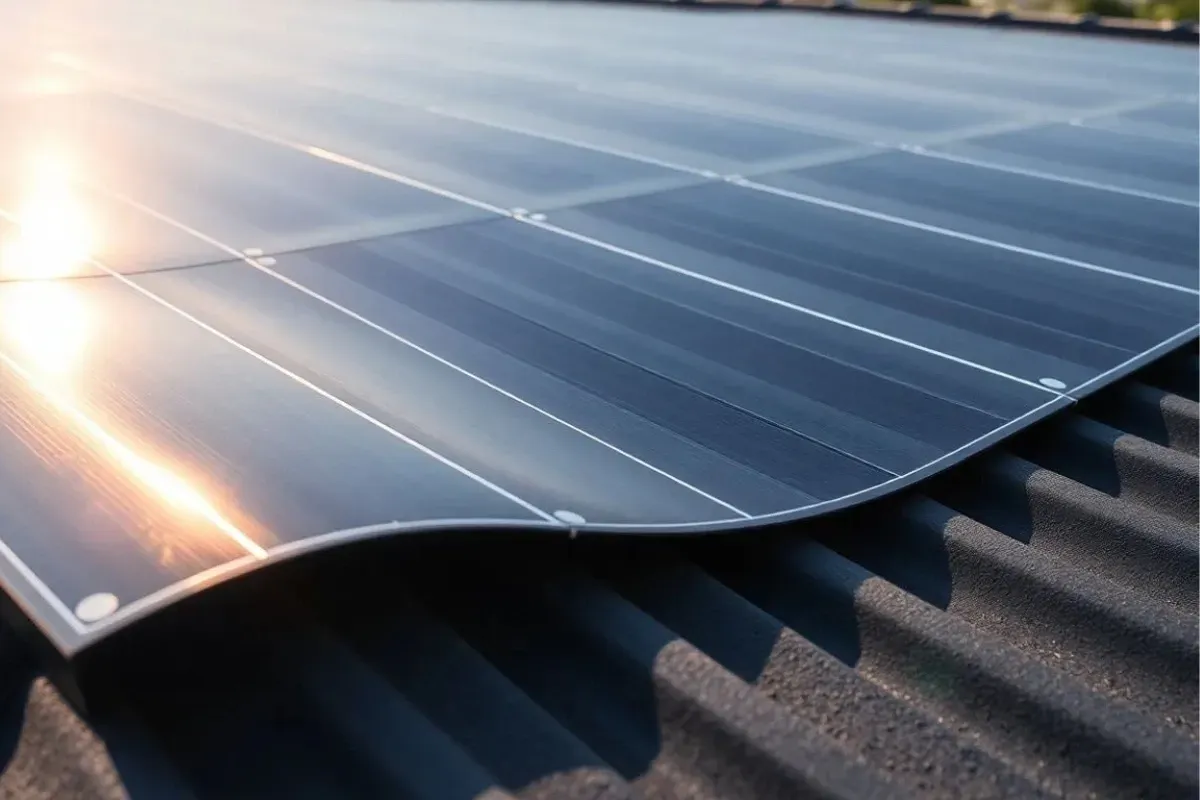
Thin-Film Solar Panels Overview - Birmingham 2026
Considering solar panels for your Birmingham home? You're not alone – more and more Brummies are making the switch to solar energy. While most folks think of the standard crystalline panels when solar comes to mind, there's another option worth exploring: thin-film solar panels. They work differently, look different, and might just be the right fit for certain Birmingham properties. Let's break down what you need to know about thin-film technology and whether it makes sense for your home.
Table of Contents
Understanding Thin-Film Solar Panel Efficiency
Comparing Thin-Film Efficiency Rates
Factors Affecting Thin-Film Performance
Installation Considerations for Thin-Film Solar Panels
Cost-Effectiveness of Thin-Film Technology
Applications and Suitability for Birmingham Homes
Making the Right Choice for Your Birmingham Property
Are thin-film solar panels worth it for Birmingham homes?
How do thin-film panels perform in Birmingham's weather?
What's the lifespan of thin-film solar panels compared to traditional panels?
Can thin-film panels work on listed buildings in Birmingham?
Should I choose thin-film panels for a commercial property in Birmingham?
Key Takeaways
• Lower efficiency but flexible design - Thin-film solar panels typically achieve 7-13% efficiency compared to traditional panels, but their lightweight, flexible nature opens up unique installation possibilities
• Cost considerations for Birmingham homes - While often cheaper upfront, their shorter lifespan (10-20 years) and space requirements might not offer the best value for typical Birmingham properties
• Specific applications work best - These panels shine in commercial settings, curved surfaces, or portable applications rather than standard residential rooftops across Birmingham

Understanding Thin-Film Solar Panel Efficiency
When Birmingham homeowners start looking into solar, efficiency usually tops their list of concerns. It's basically how much sunlight your panels can actually turn into usable electricity. With thin-film solar panels, this becomes a bit more nuanced than with traditional options.
Comparing Thin-Film Efficiency Rates
Thin-film panels get their name from the ultra-thin layers of photovoltaic material deposited onto substrates like glass, plastic, or metal. This differs significantly from the thicker silicon wafers used in standard crystalline panels that you'll see on most Birmingham rooftops.
Here's where things get interesting: while traditional silicon panels often hit 15-20% efficiency (sometimes higher), thin-film panels typically range from 10-12%. However, there are several types of thin-film technology, each with different performance characteristics:
Amorphous Silicon (a-Si):
Efficiency: 6-8%
Benefits: Flexible, performs well in low light
Common uses: Small devices, specialised applications
Cadmium Telluride (CdTe):
Efficiency: 9-15%
Benefits: Better efficiency than a-Si, cost-effective manufacturing
Lab achievements: Some tests push efficiency even higher
Copper Indium Gallium Diselenide (CIGS):
Efficiency: 12-14% (commercially available)
Benefits: Highest efficiency among thin-film types, flexible design
Lab potential: Research shows promise for low 20s efficiency
Research continues to push these boundaries, with laboratories achieving impressive results that aren't yet commercially available for home installations in Birmingham.
Factors Affecting Thin-Film Performance
Several elements influence how thin-film panels perform in real-world Birmingham conditions:
Material Type: CIGS and CdTe generally outperform amorphous silicon in terms of raw efficiency numbers.
Light Conditions: This is where thin-film panels can surprise you. Amorphous silicon, in particular, sometimes outperforms traditional panels during Birmingham's frequent cloudy days because it absorbs a broader spectrum of light.
Temperature: Birmingham's variable weather works in thin-film's favour here. Some thin-film technologies handle heat better than silicon panels, meaning less performance drop during those rare scorching summer days.
Degradation: All solar panels lose efficiency over time, but the rate varies. Some thin-film technologies may degrade faster than others, which affects long-term performance calculations.
The key takeaway? While headline efficiency numbers might seem lower, thin-film panels can perform surprisingly well in Birmingham's specific climate conditions.
Installation Considerations for Thin-Film Solar Panels
Cost-Effectiveness of Thin-Film Technology
Let's talk money, always a crucial factor for any decision making. Thin-film panels often cost less to manufacture, which can translate to lower upfront prices. However, the full financial picture requires looking beyond that initial price tag.
Since thin-film panels are less efficient, you'll need more panels to generate the same power as a smaller array of traditional panels. This means more roof space, additional mounting hardware, and potentially higher installation costs.
Remember, these are rough estimates. Actual prices depend on your chosen installer, specific manufacturer, and current market conditions across Birmingham.
Applications and Suitability for Birmingham Homes
Where do thin-film panels actually make sense in Birmingham? Their flexibility and lightweight design create opportunities that rigid silicon panels can't match.
Best Applications:
• Large, unshaded roof spaces - If you've got plenty of roof area and want lower upfront costs
• Building-integrated photovoltaics (BIPV) - Solar roof tiles or facade integration
• Lighter structures - Sheds, garages, or outbuildings that can't support heavier panels
• Partial shading scenarios - Properties with trees or neighbouring buildings causing shade
However, for most standard Birmingham homes with limited roof space, traditional silicon panels often provide better value. Areas like Edgbaston, Selly Oak, and Sutton Coldfield typically have homes that benefit more from high-efficiency panels that maximise power generation per square metre.
Performance Comparison in Birmingham Conditions:
When installing thin-film panels, proper positioning for maximum sunlight exposure remains crucial. The mounting system must handle Birmingham's weather conditions, including wind and occasional storms. Getting the installation right is essential for optimal performance.
Making the Right Choice for Your Birmingham Property
The reality is that while thin-film solar panels have their place, they're not typically the best choice for most Birmingham residential properties. Here's why:
Space limitations: Most Birmingham homes, whether in Northfield, Hall Green, or Yardley, have limited roof space. Traditional panels maximise power generation within these constraints.
Long-term value: While thin-film panels might cost less upfront, their shorter lifespan and lower efficiency often make traditional panels a better investment over 20-25 years.
Birmingham's climate: Our moderate climate doesn't particularly favour thin-film's heat tolerance advantages, while the efficiency gains from traditional panels matter more during our shorter winter days.
That said, thin-film technology continues improving. If you're considering solar for a commercial property, unusual roof configuration, or specific application where flexibility matters, it's worth discussing with local experts.
For most Birmingham homeowners, pairing high-efficiency traditional panels with solar battery storage provides the best combination of performance and value. This setup maximises your roof's potential while storing excess energy for use during peak times or power cuts.
Ready to explore your solar options? Get in touch today, and we'll connect you with a local installer who understands the unique needs of properties across Birmingham, from Victorian terraces in Ladywood to modern developments in Perry Barr. Our selected installer will assess your property, energy needs, and budget to recommend the most suitable solar solution with no obligation.

Frequently Asked Questions
Are thin-film solar panels worth it for Birmingham homes?
For most Birmingham properties, thin-film panels aren't the best choice. While they're cheaper upfront and flexible, their lower efficiency (7-13%) means you need more roof space to generate the same power. Birmingham's typical terraced and semi-detached homes often lack the extensive roof area needed to make thin-film panels cost-effective. Traditional panels usually offer better long-term value for residential installations across Birmingham.
How do thin-film panels perform in Birmingham's weather?
Thin-film panels actually handle Birmingham's variable weather quite well. They perform better than traditional panels in low-light conditions, which suits our frequent cloudy days. They're also less sensitive to temperature changes, maintaining more consistent performance during temperature swings. However, their overall lower efficiency still means traditional panels typically generate more electricity throughout the year.
What's the lifespan of thin-film solar panels compared to traditional panels?
Thin-film panels typically last 10-20 years before significant efficiency degradation, while traditional crystalline panels maintain performance for 20-25 years. This shorter lifespan significantly impacts the return on investment for Birmingham homeowners. When you factor in installation costs and Birmingham's moderate solar irradiance levels, traditional panels usually provide better long-term value despite higher upfront costs.
Can thin-film panels work on listed buildings in Birmingham?
Thin-film panels' flexibility and lightweight design can make them suitable for certain listed buildings where traditional panels might not be appropriate. Their ability to integrate into building materials or conform to unusual roof shapes could help meet conservation requirements. However, you'll still need planning permission and conservation area approval. Our team can help navigate these requirements for Birmingham's many heritage properties.
Should I choose thin-film panels for a commercial property in Birmingham?
Commercial properties might be better candidates for thin-film panels, especially if you have large, flat roof areas and want to minimise upfront costs. The lower efficiency becomes less critical when space isn't a limiting factor. However, consider the shorter lifespan and potential need for more frequent maintenance. Most Birmingham businesses still find traditional panels offer better long-term returns, but each situation needs individual assessment.