
Are Cable Penetrations in Birmingham Watertight?
A solar panel system is only as good as the roof it sits on. One of the most overlooked parts of any installation is also one of the most important: the points where cables pass through the roof. Get these wrong and you're not just dealing with a damp patch. You're looking at structural damage, electrical faults, and a voided warranty.
Quick take: watertight cable penetrations depend on proper flashings, quality glands, and correct installation technique. Cutting corners here is where leaks begin. This blog covers everything Birmingham homeowners and businesses need to know about keeping cable penetrations sealed, safe, and long-lasting.
Table of Contents
Why Watertight Cable Penetrations Matter in Solar Systems
Common Causes of Leaks Around Solar Cable Penetrations
Key Components of a Proper Solar Cable Penetration Seal
Best Practices for Installing Watertight Solar Cable Penetrations
Choosing the Right Glands, Flashings, and Sealants
Maintenance Tips to Keep Solar Cable Penetrations Leak-Free
Final Thoughts on Watertight Cable Penetrations in Birmingham
Why Watertight Cable Penetrations Matter in Solar Systems
Every time a cable passes through a roof, it creates a potential path for water. Rain, and in Birmingham there's plenty of it, can seep through even a small gap, working its way into roof timbers, insulation, and the rooms below.
The UK's NHBC roofers' guide is clear that a solar roof must perform two jobs at once: generate power and maintain a weatherproof covering. That dual function is only achievable when every penetration is properly sealed from day one.
Protecting the building. Water tracking along a cable can rot roof decking, saturate insulation, and promote mould. Left unchecked, even a minor leak can cause thousands of pounds of damage over a few winters.
Electrical safety and output. Moisture near DC cables, junction boxes, or inverters can cause ground faults and insulation failure. A wet connection doesn't just create a hazard; it reduces your system's output and can trigger equipment shutdowns. If you're investing in solar battery storage, protecting those connections from water ingress is especially important.
Warranties and compliance. Most panel and roof warranties require proper waterproofing as a condition of cover. UK standards, including BS 6229:2018, require continuity of insulation at roof penetrations to prevent condensation. An improperly sealed penetration can void your warranty before your first bill arrives.
A well-installed Birmingham solar system should be generating electricity and keeping the rain out for 25 years or more.
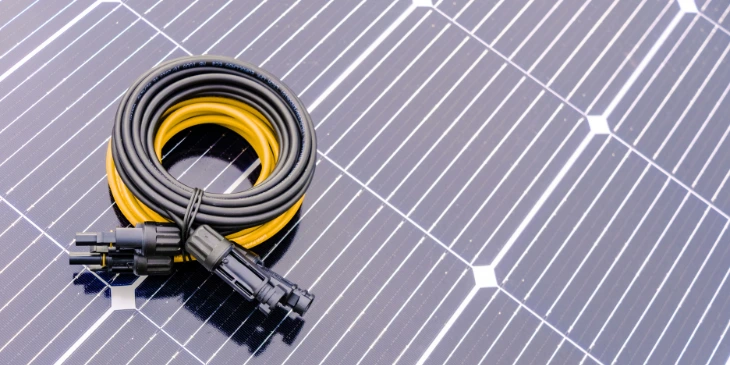
Common Causes of Leaks Around Solar Cable Penetrations
Leaks don't happen by accident. They almost always trace back to installation errors or material failure.
Improper or missing flashings. This is the most common cause. If a cable entry isn't fitted with the correct flashing for the roof type, water flows straight in along the hole. Every cable penetration should be treated like a pipe jack, with full flashing integration under the roofing. You can read more about the role of roof flashings in preventing solar roof leaks.
Cheap or incorrectly fitted glands. Off-the-shelf, non-weatherproof fittings are a false economy. Glands that aren't tightened to specification, or that use brittle plastic, will crack and fail. Marine-grade cable seals are the recommended standard.
Sealant-only shortcuts. Applying silicone around a raw hole is not a seal; it's a temporary fix. Sealant alone will crack, peel, or compress under thermal movement. It's a backup, not a solution.
Thermal and mechanical movement. Birmingham's climate puts roofs through repeated freeze-thaw cycles. If cables aren't firmly fixed near the penetration, even slight movement can work the seal loose over time.
UV and environmental degradation. Rubber seals and EPDM boots break down with UV exposure. Over several years, they can shrink, crack, or harden. Wildlife is also a factor; birds and squirrels occasionally chew on rubber boots around cable entries.
Incorrect hole sizing. Drilling a hole that's too large leaves a gap no sealant can reliably fill. The rubber nipple on a flashing boot must be cut exactly to the cable diameter. Any slop in the fit will eventually let water through.
Key Components of a Proper Solar Cable Penetration Seal
A reliable cable penetration is an assembly of components working together. Each layer plays a role.
Watertight cable gland. This is the fitting the cable passes through. It clamps around the cable using a rubber gasket or boot, sealing the outer sheath from the elements. The minimum standard is IP67; IP68 (rated for submersion) is better. Materials should be UV-resistant ABS or polycarbonate with stainless steel fixings.
Under-flashing. On tiled or slated roofs, common across Birmingham, an under-flashing is installed beneath the roofing surface. Usually lead or aluminium, it guides water away from the penetration point, tucking beneath the up-slope tile course and covering any cuts in the tiles below.
Over-flashing. Above the roofing layer, a complementary flashing covers the penetration. The top edge tucks under the higher tile course; the bottom sits on top of the course below. This sheds water downward and prevents capillary action from pulling moisture inward.
Rubber boots or collars. A flexible EPDM rubber collar wraps snugly around the cables at the exit point. EPDM stays flexible, remains UV-stable, and doesn't harden or crumble with age.
Sealant. Exterior-grade polyurethane sealant or roofing mastic is applied under flashings and around screw holes to back up the mechanical seal. Sealant is secondary. It supports the flashing; it doesn't replace it.
Mechanical fasteners. Stainless steel screws with rubber washers attach the flashing to the roof deck. Strain-relief clamps below the gland prevent cable tension from pulling on the seal above.
Best Practices for Installing Watertight Solar Cable Penetrations
Good components can still fail if the installation isn't right. Here's what proper practice looks like.
Plan and minimise penetrations. Wherever possible, route cables through an attic or internal chase rather than making multiple holes in the roof. Fewer penetrations mean fewer potential leak points.
Sequence the work correctly. Install the roof underlayment patch before positioning the flashings over it. For two-part flashings, fit the under-flashing first, then the over-flashing on top.
Drill clean, precise holes. Cut the hole to fit the flashing or cable boot exactly, not larger. A snug fit is non-negotiable. Any oversize gap will let water in.
Treat every penetration like a pipe. Every solar cable entry should be treated as a pipe-style penetration with proper metal flashing. You can find more detail on flashing techniques for different roof types. Tuck the flashing under the upper tile or shingle course so that water is always shed over it, never beneath it.
Secure the cable at the penetration. Fix cables or conduit to the roof structure close to the entry point so they can't move independently of the seal. A loose cable that pulls on the gland will eventually break the seal.
Work in dry conditions. Sealants need a dry surface to cure properly. Cover any open holes if weather changes mid-job.
Choosing the Right Glands, Flashings, and Sealants
Cable glands. Choose glands rated at minimum IP67, with IP68 preferred. The housing should be UV-resistant ABS or polycarbonate with compatible rubber grommets sized to your cable diameter. Double-entry glands designed for two cables are neater and reduce the number of penetrations needed.
Flashings. The right flashing depends on your roof type. On pitched tile roofs, the most common in Birmingham suburbs like Sutton Coldfield and Selly Oak, lead or aluminium flashings integrated with the tile course are standard. EPDM collar-style flashings are well-regarded for their durability. On flat roofs, prefabricated polymer or rubber saddle flashings that bond directly to the membrane are the right choice.
Sealants. Use an exterior-grade polyurethane sealant or a roofing mastic compatible with both the flashing and the roof surface. Avoid standard silicone on EPDM, as it can degrade the rubber. Apply sealant as a backing layer around fixing points, not as the primary seal.
Maintenance Tips to Keep Solar Cable Penetrations Leak-Free
A good installation will hold for years, but it won't look after itself.
Annual visual inspections. Check all cable entries at least once a year, and after any period of severe weather. Look for cracks or splits in rubber boots, gaps at flashing edges, lifted tiles near the entry point, or rust on fasteners. Properties in areas like Edgbaston, Northfield, and Erdington, where older housing stock is common, should be especially thorough.
Check from below. A torch check in the loft space after heavy rain is one of the fastest ways to catch a problem early. Dark stains or damp insulation near cable routes is a red flag. You can also run a garden hose over the penetration area with the system off to test for hidden leaks.
Keep the area clear. Remove debris that builds up around flashings. Trapped moisture accelerates seal degradation. Trim back any vegetation touching the cables and check that rubber boots haven't been disturbed by birds or wildlife.
Retighten and reseal where needed. Over time, fixing screws can work loose and sealant beads can crack. Retighten loose fasteners and reapply sealant where it's peeled or cracked. If an EPDM boot is showing significant UV degradation, replace the whole flashing unit rather than patching it.
Check the electrics too. Inspect junction boxes and DC connections for any sign of water ingress during routine visits. Wet or corroded connections usually mean there's a leak above. Fix the penetration first, then address the electrical component.
Our solar maintenance and repair service covers full inspections of penetrations and seals. It's far cheaper to replace a seal proactively than to repair water damage after the fact.
Final Thoughts on Watertight Cable Penetrations in Birmingham
Birmingham's climate is not forgiving. Rain, frost, and the occasional storm are facts of life here, and your solar installation needs to handle all of it without letting a drop inside.
Use purpose-made, IP-rated glands. Flash every cable entry as you would a plumbing vent. Don't rely on sealant alone. Secure cables so they can't move at the gland. Inspect those penetrations every year.
Whether you're in Ladywood, Hall Green, Hodge Hill, Perry Barr, Yardley, or anywhere else across the city, the standards are the same. A properly installed solar system should generate power and keep your roof watertight for the full lifetime of the panels.
If you're unsure about the condition of your current installation or are thinking about going solar, get in touch with our team. You can also explore our local solar pages to find out more about installations in your area.

Solar System Cable Penetrations Staying Watertight FAQs
Do solar panels themselves cause roof leaks?
No. Panels alone don't leak; installation errors do. Leaks almost always trace back to rushed assessments, skipped flashing, sealant-only shortcuts, or sloppy penetrations. A properly installed panel and gland will not let water through.
What usually causes leaks after solar installation?
The most common failures are missing or poorly installed flashing and inadequate sealing. Skipped steps, particularly using tape or sealant only rather than proper flashings, are flagged by trade bodies as typical causes. Inexperienced installation is the root of most problems.
How should cable penetrations be sealed?
They should be flashed like any pipe penetration, with metal flashing integrated under the roofing layers. The NRCA recommends treating PV cable entries as pipe penetrations, using metal flanges installed in the correct tile or shingle course. Do not rely on caulk or tape alone. Water should always flow over the flashing, not under it.
What IP rating and materials do I need for cable glands?
Use glands rated at least IP67, with IP68 preferred. The housing should be UV-resistant plastic or metal. Match the gland size to your cable diameter and use marine-grade or stainless steel fixings for durability.
How often should cable penetrations be checked?
At minimum, once a year and after any severe weather. Look for cracks or splits in rubber boots or sealants, and check for lifted flashings or loosened fixings. A quick loft check after storms can catch minor leaks before they become major repairs.


