
Can Semi-Detached Homes in Birmingham Go Solar?
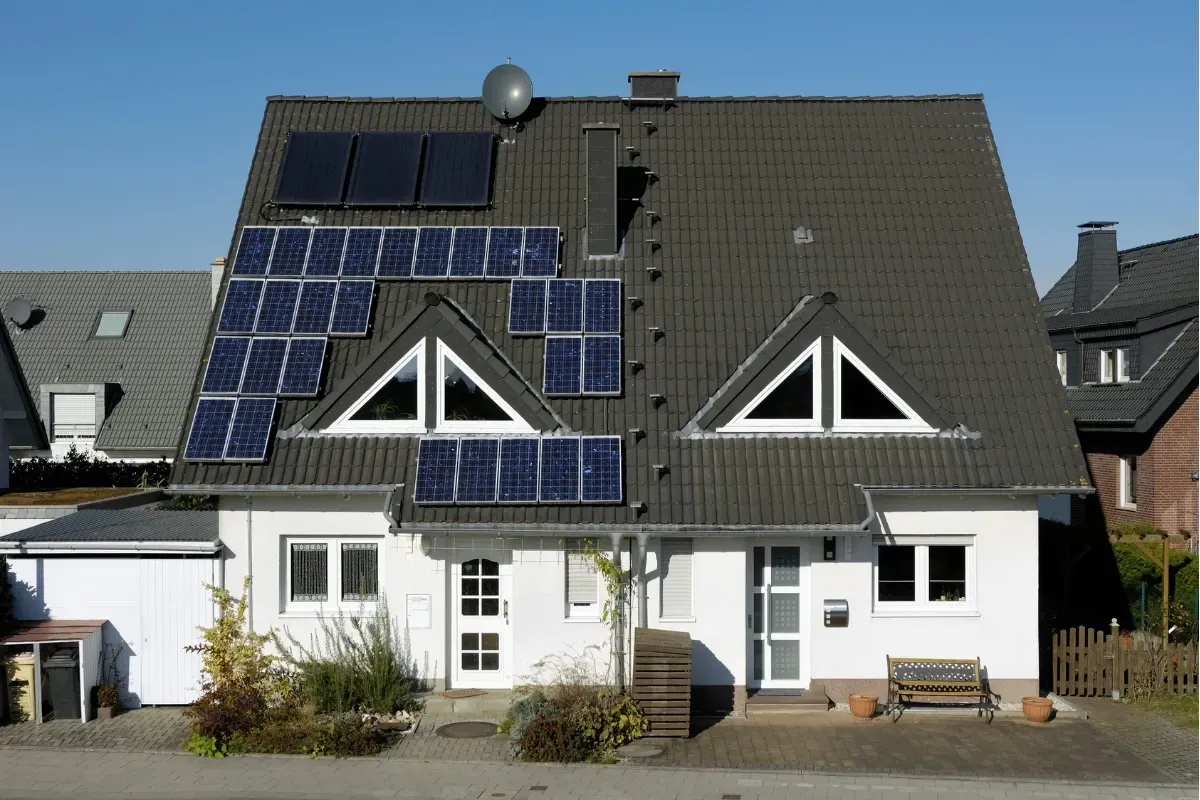
If you're living in a semi-detached house in Birmingham and wondering whether solar panels are for you, the answer is a resounding yes. Many homeowners assume that sharing a wall might complicate things, but semi-detached homes are actually brilliant candidates for solar.
Quick take: Semi-detached houses in Birmingham can absolutely go solar. You'll typically have enough roof space for a 3-4 kW system (around 8-10 panels), costs run between £5,000-£7,500, and payback is roughly 10-12 years. The main considerations? Shading from nearby structures, roof orientation, and a quick chat with your neighbour. No planning permission needed in most cases.
Table of Content
What Makes Semi-Detached Houses Different for Solar?
Is Your Semi-Detached House Suitable for Solar Panels?
Shared Walls, Neighbours, and Planning: What You Need to Know
Costs, Savings, and Payback for Semi-Detached Solar
Shading & Nearby Buildings: The Biggest Semi-Detached Solar Challenge
Common Mistakes to Avoid When Going Solar on a Semi-Detached House
What Makes Semi-Detached Houses Different for Solar?
Let's start with the obvious: you share one wall with your neighbour. This brings a few unique considerations, but they're not the deal-breakers you might think.
The shared wall means your roof sits adjacent to your neighbour's roof. Most solar work stays entirely on your side of the boundary, and any work on shared structures typically doesn't require prior agreement with your neighbour (though it's good practice to have a chat anyway).
Here's what works in your favour: semi-detached houses typically have ample roof space. You've usually got a pitched roof with two large surfaces, which often provides enough room for a system to meet your home's energy needs. Solar panels can be fitted on almost any material and roof structure.
One thing to be mindful of: being attached to another house means watching for structures on your neighbour's side that might cast shadows. Maybe they've got a loft extension, or there's a chimney along the party wall. These could affect sun exposure, but modern solar technology can work around partial shading.
The important thing? Sharing a wall doesn't prevent you from going solar. Detached or semi-detached homes are ideal for solar panels because of the larger roof space and flexibility. Panels can even go on a garage or extension roof if that works better.

Is Your Semi-Detached House Suitable for Solar Panels?
Most semi-detached homes tick all the right boxes for solar. Here's what matters:
Available Roof Space
A typical solar panel measures about 1.6-2.3 m². For a standard 3-4 kW residential system, you're looking at 6-12 panels, requiring roughly 15-25 m² of roof space.
Good news: a three-bedroom semi-detached house in Birmingham often has around 70 m² of roof surface. That's plenty for a ~3.5 kW system. Even if space feels tight, high-efficiency panels generate more power per square metre.
Roof Orientation and Shading
The direction your roof faces impacts solar output. South-facing is the sweet spot, but east or west-facing roofs work brilliantly, typically producing only about 15-20% less energy compared to due-south.
East-facing panels generate more power in the morning, whilst west-facing panels kick in during the afternoon and evening. Only north-facing roofs are generally not recommended. Got a flat roof? Installers can mount panels on angled frames facing south.
Shading is critical. Any shadows from nearby trees, buildings, chimneys, or TV aerials will reduce your panels' energy production. Ideally, the sections where panels go should be unshaded for most of the day.
If minor shading is unavoidable, modern systems can use power optimisers or micro-inverters so that one shaded panel doesn't drag down the entire array's performance.
Roof Shape, Age and Construction
Solar panels can be installed on almost any roof type: pitched slate, concrete tiles, metal sheets, or flat felt roof. What matters more is that your roof is structurally sound and can support the panel weight (around 20 kg each). Most modern Birmingham houses' roof structures handle this load easily.
The pitch (angle) around 30-40° is ideal in the UK, capturing sunlight well and allowing rain to help keep panels clean.
Because solar panels last 25+ years, you want your roof in good shape for just as long. If your roof is very old (over 10-15 years since last re-roofing) or has damage, address that before installing solar. If your roof may need replacement within the next decade, consider re-roofing first.
Shared Walls, Neighbours, and Planning: What You Need to Know
Permitted Development and Planning Permission
In the UK, most domestic solar panel installations are classed as "permitted development," meaning you typically don't need planning permission. As long as you follow basic rules (panels not protruding more than 20 cm from the roof, not above the highest part), you can proceed without a formal application.
Your neighbours cannot block your solar installation if it meets permitted development criteria. Only in special cases (listed building or conservation area) would you need explicit planning permission. For the average semi-detached house in Edgbaston or Erdington, solar panels are usually allowed without planning approval.
Party Walls and Neighbours
In most solar installations, work is limited to your side of the roof and doesn't physically alter the party wall. A typical panel installation usually wouldn't trigger the Party Wall Act. However, if your installation involves work on a shared wall or mounting equipment affixed to a shared chimney stack, you may need to notify your neighbour.
Some semi-detached homeowners in Birmingham coordinate installations with their attached neighbour. This can be brilliant if both parties are interested. If both homes install at once, you could share scaffold costs.
Even if your neighbour isn't joining in, keeping them informed is beneficial. Solar panels are designed with anti-reflective glass and produce less glare than a standard window. As long as your panels don't overhang your neighbour's property boundary, you're within your rights.
Costs, Savings, and Payback for Semi-Detached Solar
One of the most common questions: how much will it cost, and will it save you money?
Upfront Costs
In Birmingham, a standard domestic solar setup is around 3.5 kW (roughly 10 panels). As of 2026, such a system costs approximately £6,000-£7,500 for professional installation. This assumes a straightforward installation on a pitched roof with good access.
The price varies: larger systems cost more. Adding a battery will add £5,000-£8,000 extra. This cost is zero-rated for VAT in the UK.
Savings and Payback
Solar panels immediately reduce how much electricity you need to buy from the grid. According to recent analysis, a typical solar installation in England will pay for itself in roughly 10-12 years if you're consuming a good portion of the energy.
A 3-4 kW system might generate around 3,000-3,500 kWh per year in Birmingham. If you use 70% directly and export 30%, your yearly savings could be around £600-£700 on electricity bills plus maybe £50-£100 from export credits through the Smart Export Guarantee.
What Changes the Numbers?
A few factors can shorten or lengthen payback:
High self-consumption (working from home, EV charging during the day) makes solar more lucrative
Geography: Birmingham gets decent sun, though southern areas might generate 10-15% more energy
Future energy pricing: if electricity prices rise further, solar pays back faster
Installation complexity: extra work like upgrading an old consumer unit might increase upfront price
Even accounting for variations, investing in solar on a semi-detached Birmingham house is generally a sound long-term investment with double-digit percentage annual returns.

Shading & Nearby Buildings: The Biggest Semi-Detached Solar Challenge
When it comes to solar performance, shading is your biggest challenge. Solar PV cells are highly sensitive to shading. Studies show that if just one cell of a panel is shaded, the output of that whole panel can drop by 50-80%. If one panel in a series string is heavily shaded, it can drag that string's generation down to near zero.
For semi-detached houses in areas like Hall Green or Hodge Hill, common shade sources include a neighbour's two-storey extension, tall trees, shared chimneys, or the neighbouring house itself if roofs are staggered.
Semi-detached houses often have one roof face that's sunnier. Concentrate panels on the sunniest portions even if that means a less-than-south direction. If shading objects can be trimmed or removed, that's worth doing.
When some shade is unavoidable, micro-inverters or power optimisers allow each panel to operate independently. With traditional string inverters, shade on one panel could reduce the whole string's output, but with panel-level optimisation, the shaded panel is bypassed.
Most reputable installers will recommend micro-inverters or optimisers if your Birmingham site has partial shading patterns.
Common Mistakes to Avoid When Going Solar on a Semi-Detached House
Ignoring Your Roof's Condition
Don't rush into installation without assessing whether your roof is ready. If your roof is damaged or has very old tiles, you might have to remove panels soon to fix it. Make sure the roof is structurally sound before panels go up. Also, plan panel layout on the best roof surfaces, not the easiest spot.
Not Researching Local Permissions
Always do your homework on what rules apply to your property. This includes informing your Distribution Network Operator (DNO) and ensuring compliance with building regulations. Working with a vetted local installer through Solar Panels Birmingham ensures these bases are covered.
Overlooking Maintenance and Warranties
Know what warranties you have: panels typically have 25-year performance warranties, inverters 5-10 year warranties. Ensure you register any manufacturer warranties appropriately. Fortunately, solar maintenance is minimal. Monitor your system's performance via the inverter app.
Misjudging Energy Needs
Analyse your past 12 months of electricity usage and consider future changes (like an EV or heat pump). Many semi-detached homeowners in Ladywood, Northfield, or Perry Barr find 3-4 kW is a sweet spot.
Final Thoughts on Solar for Semi-Detached Houses
Solar panels are a fantastic investment for semi-detached homeowners in Birmingham. Being attached to a neighbour isn't a barrier; it just adds a few extra considerations like courtesy and careful planning.
Semi-detached houses make up a huge portion of homes across Birmingham, from Selly Oak to Sutton Coldfield, representing a brilliant opportunity for scaling up solar energy in residential areas. If you address the key factors (suitable roof, minimal shading, neighbour coordination), there's no reason a semi can't enjoy the same energy savings and environmental benefits as a detached property.
There's also a community aspect: when one half of a semi-detached pair installs solar, it often sparks interest in the other half. By going solar, you might motivate your adjoining neighbour or others in Yardley to do the same.
Solar on a semi-detached house in Birmingham is not only feasible; it's a smart, future-proof upgrade that adds value to your home. The rewards are substantial: electricity savings over 25+ years, contributing to a greener Birmingham community, and taking control of your energy future.
Looking to explore solar options for your Birmingham home? Get in touch to discuss how solar panels can work for your semi-detached property. The sun doesn't shine only on detached houses; it shines on semis too.

Solar for Semi-Detached Houses FAQs
Do I need planning permission to install solar panels on a semi-detached house?
In most cases, no formal planning permission is required. Solar panels are considered permitted development as long as certain conditions are met. Your neighbours generally cannot legally object. Exceptions would be if your Birmingham home is in a conservation area or is a listed building.
How many solar panels can I fit on a semi-detached house?
Typically about 8 panels can fit on the main roof. If you have additional roof sections (like a rear extension or garage), you could fit more. A 3-bed semi often has room for a 3-4 kW array (6-12 panels). The number should be guided by your energy needs and budget.
How much do solar panels cost in Birmingham, and what is the payback time?
A typical 3.5 kW system costs roughly £5,000-£6,500 in Birmingham. This covers panels, inverter, installation, and VAT is 0%. Payback time is around 10-12 years. Given panels often last 25+ years, you'd get over a decade of "free" energy after breakeven.
Does my roof need to face south for solar to be worthwhile?
Not at all. South-facing is optimal, but east or west-facing roofs work fine, typically yielding only about 15-20% less energy. North-facing roofs are the only ones generally discouraged. Real-world data shows that east and west-facing solar panels still generate roughly 80-85% of what the same system would produce facing due south.
Will installing solar panels damage my roof?
When done by qualified professionals, solar panels will not damage your roof. Roof damage from a solar panel installation is extremely rare. Installers use special mounting brackets with appropriate waterproofing to prevent leaks. Reputable installers provide a workmanship warranty (often 5-10 years) covering roof integrity. Hire an experienced, certified installer like those at Solar Panels Birmingham.
Should I replace my roof before installing solar panels?
If your roof is over 15-20 years old or you've been noticing leaks or missing tiles, do the roof refurbishment first. You don't want to remove panels in 5 years to replace a failing roof. If your roof is fairly young (under 10 years old) and in good shape, there's no need to replace it.
What if part of my roof is shaded?
You can still install solar, but you'll need to manage the shading. The installer can arrange panels to avoid the worst shade spots and use micro-inverters or power optimisers so that a shaded panel's output loss won't affect the others. If the shading source is a tree on your property, you can trim it. Consider adding battery storage to maximise use of solar energy generated during peak sun hours.