
Solar Panel Installation Birmingham
Power the Future of Birmingham.
Lead the Charge.
Why Install Solar Panels?

1. Lower Electricity Bills
Solar panels can reduce the electricity bought from the grid in Birmingham, but savings are not immediate or guaranteed for every household. Results depend on how much the panels generate, electricity used on site, tariffs, and installation costs.

2. Save the Planet
Solar energy is one of the cleanest power sources, significantly reducing greenhouse gases and pollution in Birmingham's urban environment. By installing solar panels, you're actively supporting the UK's goal to cut carbon emissions by 68% before 2030.

3. Beat Rising Energy Costs
Traditional energy prices can fluctuate wildly, leaving Birmingham households struggling with ever-increasing bills. Solar panels shield you from these rising costs by generating your own electricity, particularly during expensive peak hours.

4. Low Maintenance
Today's solar panels, also known as PV panels, are built tough with minimal maintenance requirements and typically come with warranties up to 25 years. Even with Britain's notoriously changeable weather, they prove to be a reliable long-term investment.

5. Energy Efficiency
A solar installation can lift your home's EPC rating, the energy efficiency score every property is measured against. A higher band is something buyers and mortgage lenders increasingly pay attention to.

6. Government Incentives
Eligible small-scale generators may receive Smart Export Guarantee payments for electricity exported to the grid. Qualifying solar installations in homes and buildings used solely for relevant charitable purposes may also benefit from 0% installation VAT until 31 March 2027. Ordinary commercial installations generally do not qualify.

7. Self-Sufficiency
Solar panels can lower the amount of electricity a home needs from the grid, but a standard grid-connected system shuts down during a power cut. Supplying backup electricity during outages requires suitable additional equipment and a correctly configured system.

8. Power the UK's Future
By choosing solar, you're directly contributing to the UK's clean energy supply while joining a community of forward-thinking locals making a real difference. This collective action is essential for the country to achieve its ambitious 2050 net-zero carbon emissions target.
Why Solar Panels
Birmingham?
Local Know-How
As born-and-bred Brummies, we understand our city's unique weather and building quirks better than anyone. We recognise that each Birmingham neighbourhood has its own solar installation challenges. Hence, the installers we connect you with always provide uniquely tailored solutions.
Future Ready
Our selected installers only use the most efficient, up-to-date solar kit that's built to handle Birmingham's varied weather. The team make sure every system is set up to last, with room to grow in the future. Your investment is in safe hands.

Transparency
We believe in being honest, no tricks, no hidden costs. From your first quote request, your vetted installer will give you clear pricing and timelines for each part of the job. It's this straightforward approach that's earned us the trust of people across Birmingham.
Community Driven
By helping our neighbours reduce their energy costs and carbon footprints, we're building a stronger, greener Birmingham that benefits everyone. Our team is committed to placing your long-term savings and satisfaction at the heart of everything we do.
Power The Future.
Go Solar Today.
Power The
Future.
Go Solar
Today.
Home Solar
Installation
Comprehensive Residential Services
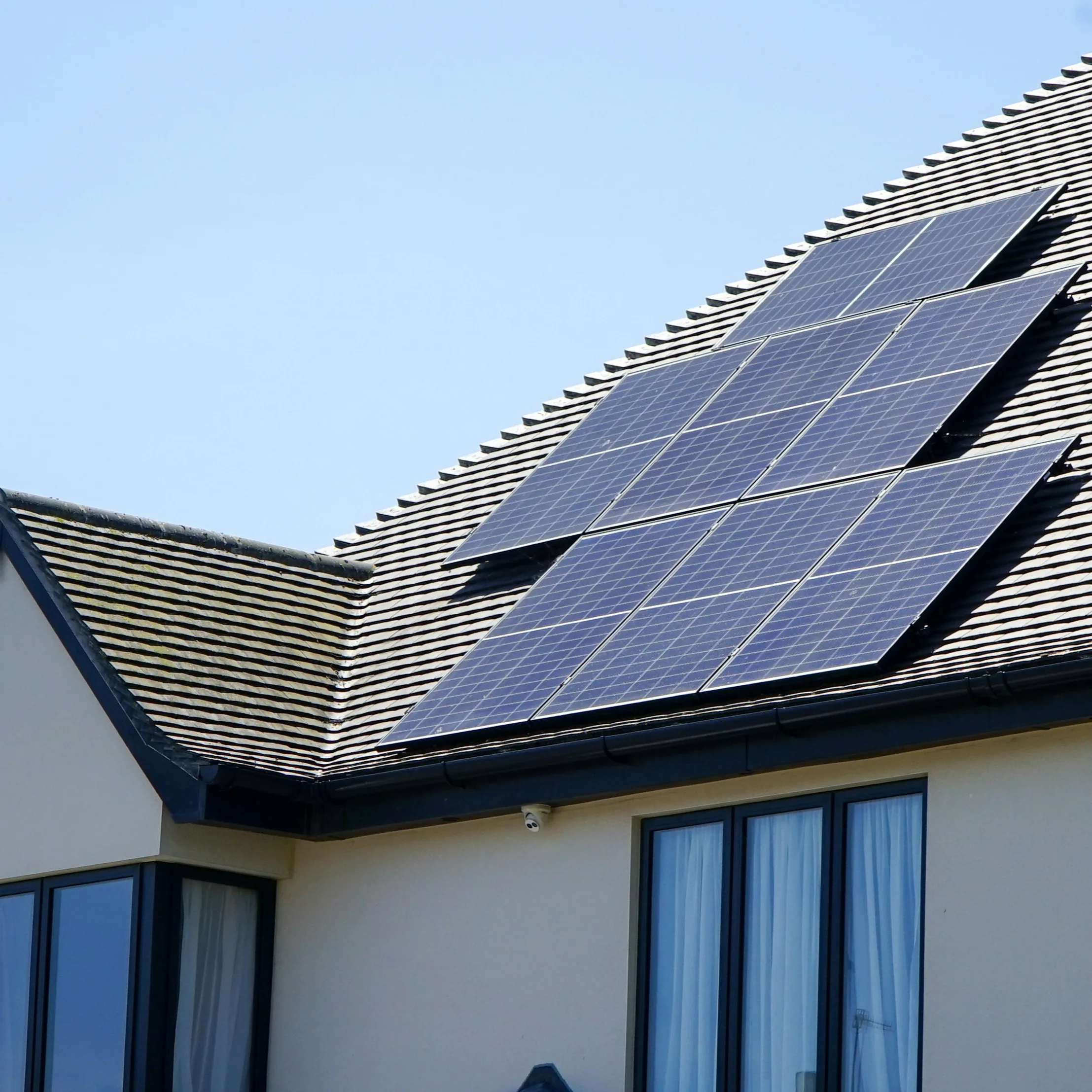
Our vetted installers specialise in custom solar installations for Birmingham's diverse properties, from terraced houses in Handsworth to new builds in Edgbaston. Solutions include standard on-roof panels, sleek in-roof systems for period homes, ground-mounted options for properties with gardens, and custom designs for new builds. Each installation is tailored to your property's unique layout, whether it's a curved roof in the Jewellery Quarter or a pitched roof in Moseley, ensuring you get a solar solution that maximises efficiency while complementing your home's distinctive character.
Planning Guidance
While most residential installations don't require planning permission, our team provides complete guidance for exceptions like flat roofs (where angled frames are fitted) and listed buildings, working closely with Birmingham City Council in the process. Your installer also addresses your roof’s orientation towards the sun, and any shading issues from neighbouring buildings or trees, recommending alternatives like ground-mounted systems when necessary to ensure you still receive the full benefits of solar energy despite any site limitations.
Commercial Solar
Installation
Tailored Commercial Services
At Solar Panels Birmingham, our independent installation partner provides commercial solar panel installation services to all kinds of businesses in the region, from small Jewellery Quarter offices to large Perry Barr factories and surrounding farms. Services include on-roof and in-roof panels for traditional or modern buildings, ground-mounted systems for properties with outdoor space, and custom designs for new commercial builds. Your installer will analyse your past year's electricity bills to estimate savings, suggest the best installation, and calculate the payback period.
Benefits for Businesses
Investing in commercial solar brings real, practical advantages to your Birmingham business. You'll generate your own power during working hours, cutting reliance on the grid and keeping those rising energy costs at bay. Boost your business’s green credentials while also earning extra cash by selling surplus power back to the grid. With hardly any upkeep needed and lengthy warranties to back you up, your system keeps working hard for decades. Add battery storage if you fancy keeping the lights on after dark. Lower running costs make your premises cheaper to operate, and with the government's incentives, your investment pays off even quicker.
Solar Panel Savings
£391.51
Illustrative Annual Bill Reduction
+
£148.75
Illustrative Annual Export Payment
=
£540.26
Illustrative Annual Benefit
This illustrative example assumes a 3.5 kWp solar array generates 2,975 kWh annually. Actual production varies with orientation, shade, equipment and weather; this is not a forecast.
A system's standard-test-condition rating does not translate to a fixed annual UK generation figure. The installer can estimate the expected yield at your property.
Assuming 50% is used on site (1,487.5 kWh), at Ofgem's October–December 2026 Great Britain average default-tariff direct-debit rate of 26.32p/kWh, the illustrative avoided electricity cost is £391.51. Actual tariffs differ.
Assuming the other 1,487.5 kWh is exported at a hypothetical 10p/kWh Smart Export Guarantee tariff, the export payment is £148.75. Suppliers set their own export rates, so 10p is not guaranteed.
Under these assumptions, illustrative annual bill savings and export income total £540.26 before installation and finance costs. Your actual result may be higher or lower.
Want to know exactly how much you could save? Please get in touch with us at Solar Panels Birmingham.
Illustrative example updated 1 November 2026 using Ofgem's October–December 2026 average electricity rate. Generation, consumption and SEG rates are assumptions.
Types Of
Solar Panels
Monocrystalline Solar Panels
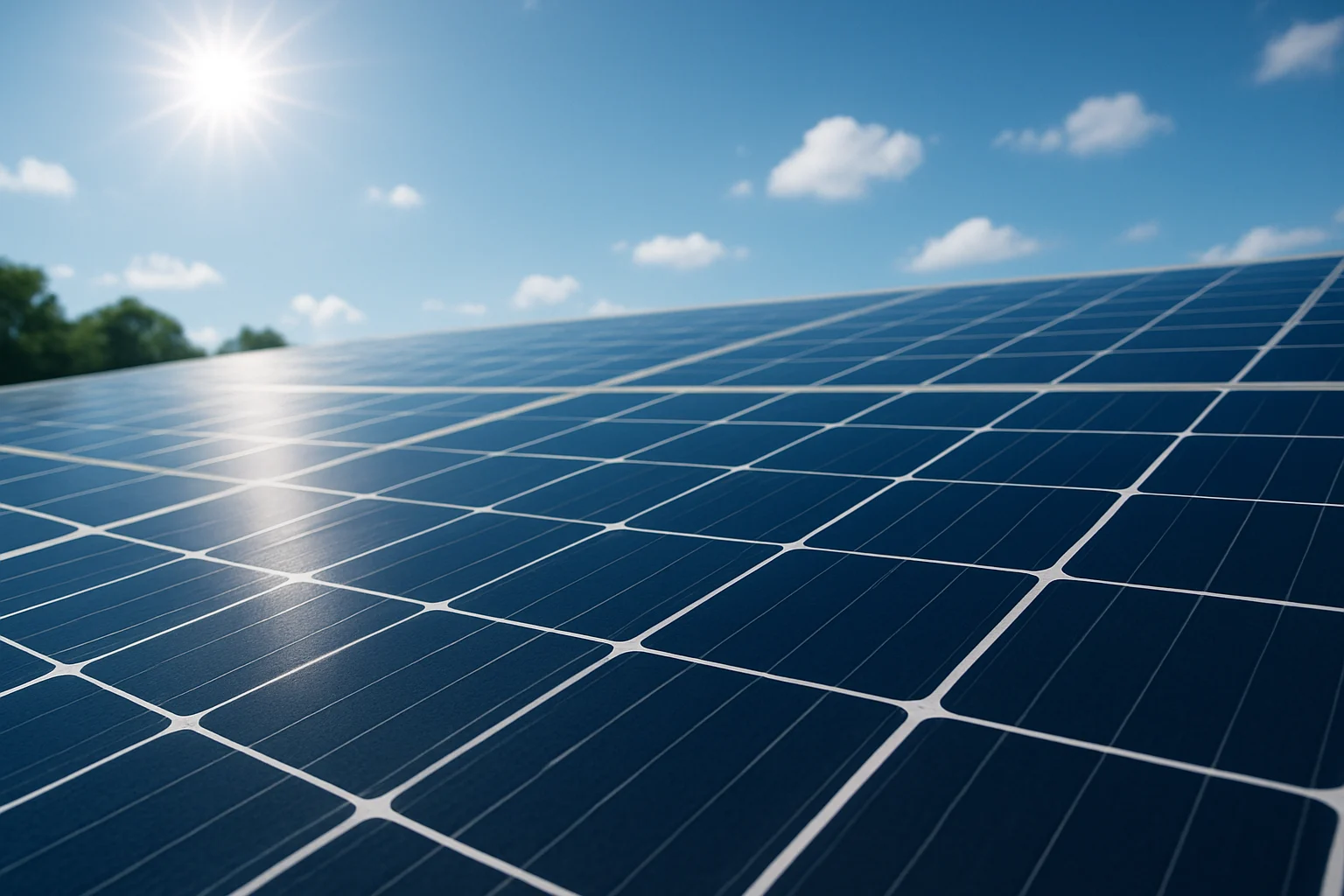
These panels use a single silicon crystal to deliver 20-25% efficiency in everyday conditions, and they'll typically last 30-40 years on your roof. The higher power density means you need fewer panels to hit your target output, useful when you're working with the compact roof spaces found on Birmingham's terraced homes and semi-detached properties.
Read More
Expect to pay around 10-15% more per watt compared to polycrystalline, but that extra cost makes sense when roof space is tight. The all-black finish also sits well against the slate and tile roofs you'll find across Bournville, Moseley, and Edgbaston.
In practice: Mono panels are fitted on most residential properties where the roof area is limited, visual appearance matters, and you're focused on long-term returns rather than just the cheapest starting price.
Polycrystalline Solar Panels
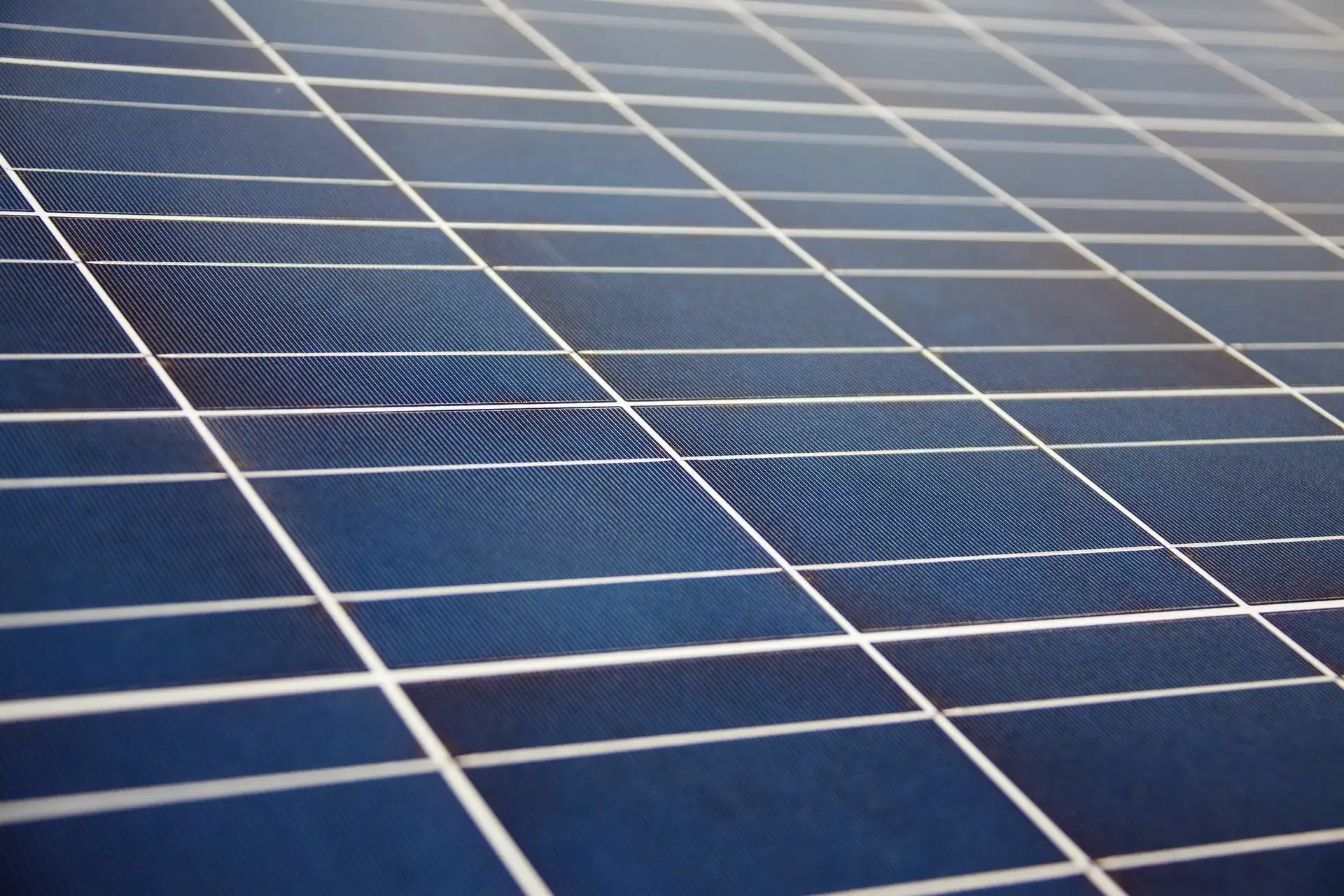
Poly panels are built from multiple silicon fragments, which gives them their distinctive blue, speckled look and brings efficiency down to around 13-16%. Manufacturing costs are lower, so the price per watt drops, handy if you've got a larger roof or you're kitting out a commercial building with plenty of space.
Read More
The downside? You'll need about a third more panels to generate the same 4 kW output as a mono setup, and they're a bit more sensitive to heat. That's less of a concern in Birmingham's climate, but it's worth noting if you've got a south-facing commercial roof that gets full sun in summer.
In practice, poly panels are used on large, unshaded roofs where keeping upfront costs down matters more than aesthetics or squeezing every watt from limited space.
Thin-Film Solar Panels
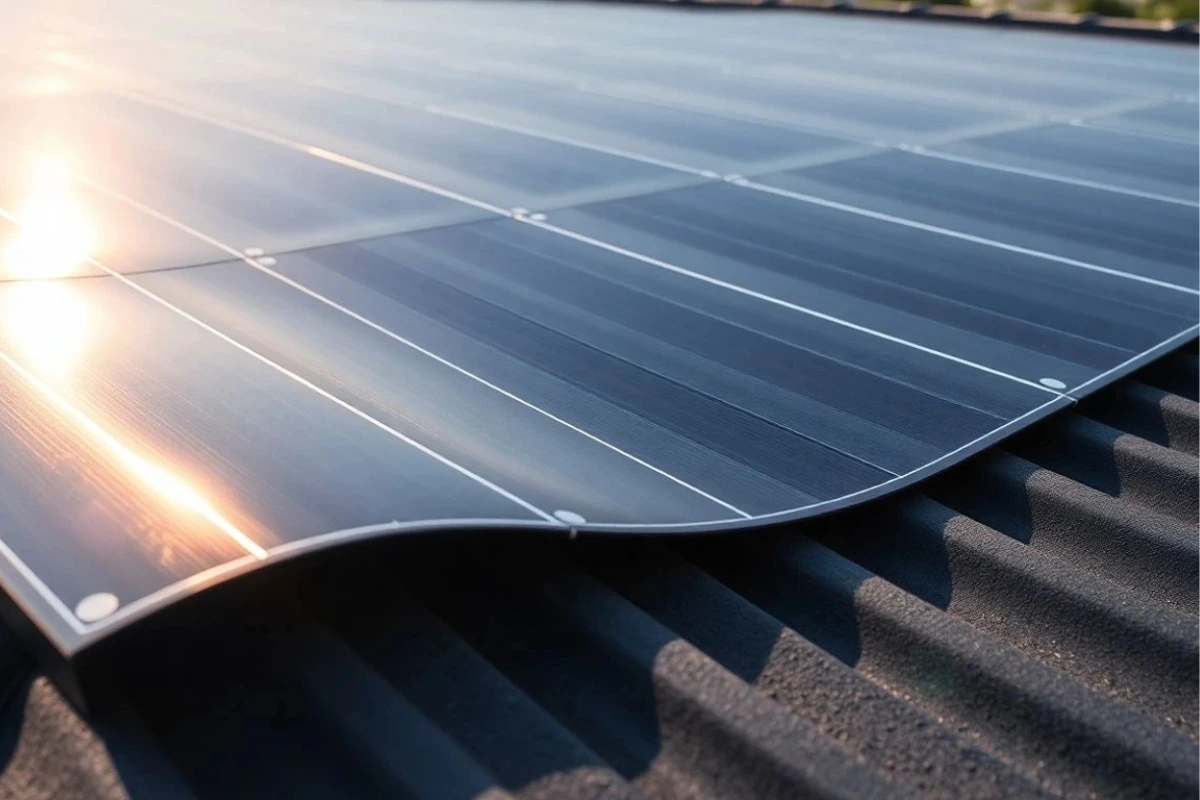
Thin-film technology produces lightweight panels, sometimes even flexible ones, with efficiencies ranging from 10-20%. They cope well with heat and partial shading, which makes them useful where traditional rigid frames won't work or where drilling into the structure isn't allowed.
Read More
These would be ideal on listed buildings around Birmingham's Jewellery Quarter, curved bay roofs in Harborne, or the standing-seam metal roofs on some of the city's industrial units. The trade-off is shorter warranties (typically 10-20 years), faster performance degradation over time, and a much larger surface area requirement.
In practice, thin-film panels are typically used for heritage projects or flat commercial roofs where weight limits and wind loads are genuine concerns.
How Much Will
You Save?
How Much Will You Save?
Solar Panel
Installation Process

1. Roof Access & Preparation
Your installer starts by setting up scaffolding that's right for your Birmingham home. For example, a bungalow on the outskirts of Birmingham will need less than a three-storey terraced house in the city centre. Before lifting a finger, a thorough roof survey is done. This checks the roof's condition, tile arrangements, and any potential challenges, such as uneven surfaces, so there are no nasty surprises during installation.

2. Mounting Structure Installation
Next, your installer will carefully remove just enough tiles to expose your rafters, then secure strong hooks directly into them. Everything goes back exactly as it was, with added waterproof flashing to keep your roof dry, even with Birmingham's famous rain. For fancier roof tiles, a bit of custom cutting may be needed. Once the hooks are solid, our team attach to it and secures the mounting rails with high-quality screws, creating a sturdy frame that won't budge for decades.

3. Panel Installation
With the frame ready, the team clamp your panels securely in place. Our local installers make sure each panel is precisely aligned for optimal sun exposure, which is vital for getting the most efficiency in Birmingham's changeable weather.

4. Electrical Integration
Once the panels are up, the team move on to the electrical integration. This involves wiring the DC output from the panels to an inverter, which converts the DC power into AC power for your home. The cabling gets neatly tucked under tiles or through small, properly sealed holes. The AC output from the inverter is then connected to your property's electrical supply and the grid, adding safety measures like isolators and an Ofgem-approved meter. Our team also works with the local District Network Operator (DNO) to secure your system's connection to the power grid

5. Commissioning & Certification
Before commissioning the system, your installer conducts thorough safety and performance checks to ensure everything is functioning correctly. You will receive all the necessary paperwork, including manuals, warranty details, and maintenance instructions. Finally, the team register your system with the Microgeneration Certification Scheme (MCS), which serves as a mark of quality and compliance with UK standards.
How It Works
1

Get in touch
2

Talk to an expert
3

Get a quote from the installer
4

Save on bills
We Promise To Energise
The City Of Birmingham And Its People.
Birmingham
Solar Grants
Good news for local homeowners and businesses: Eligibility-based schemes may contribute towards suitable measures, subject to assessment and available funding.

0% VAT Scheme
Qualifying installations of solar panels in homes and buildings used solely for a relevant charitable purpose benefit from 0% VAT until 31 March 2027. The relief does not generally apply to ordinary commercial premises.
Birmingham’s Warm Homes: Local Grant can include solar PV for eligible households in specified priority areas, subject to a home assessment, approved measures and available funding. Check current eligibility with Birmingham City Council.
ECO4 Scheme
On benefits and living in an energy-inefficient home? You could qualify for funded home energy upgrades through the ECO4 scheme, which may include solar panels where your property is suitable. Act quickly as the scheme runs until 31st December 2026.
We Promise
To Energise
The City Of Birmingham And Its People.
Birmingham
Solar Grants
Good news for local homeowners and businesses: Eligibility-based schemes may contribute towards suitable measures, subject to assessment and available funding.
0% VAT Scheme
Qualifying installations of solar panels in homes and buildings used solely for a relevant charitable purpose benefit from 0% VAT until 31 March 2027. The relief does not generally apply to ordinary commercial premises.
ECO4 Scheme
On benefits and living in an energy-inefficient home? You could qualify for funded home energy upgrades through the ECO4 scheme, which may include solar panels where your property is suitable. Act quickly as the scheme runs until 31st December 2026.
Birmingham’s Warm Homes: Local Grant can include solar PV for eligible households in specified priority areas, subject to a home assessment, approved measures and available funding. Check current eligibility with Birmingham City Council.
Birmingham Wide Coverage
At Solar Panels Birmingham, our installation partner serves the entire city with solar installation services. Whether you're based in the Victorian streets of Edgbaston or the bustling communities of Erdington and Hall Green, our team brings local know-how to every project.
The team also cover the urban core of Hodge Hill and Ladywood, as well as the more suburban areas of Northfield, Perry Barr, Selly Oak, Sutton Coldfield, and Yardley.
Being Brummies, our installers know the city's building rules, housing styles, and weather quirks like the back of their hand. Whether you've got a Victorian terrace, a 1930s semi, or a modern flat, the team will ensure a quality solar system perfectly suited to your Birmingham property.
Make The Change.
Lead The Charge.
Make The
Change.
Lead The
Charge.
Solar Panel
FAQs
Is Planning Permission Required For Solar Panels In Birmingham?
For most Birmingham homes, you won't need any planning permission to get solar panels installed. There are a few exceptions though:
If your panels will stick out more than 200mm from your roof or wall and extend above the highest point of your roof (not counting chimneys), you'll need to check with Birmingham City Council.
Properties in conservation areas or listed buildings will need approval before installation.
If you live in a flat or apartment where panels would go on shared property, you might need permission.
Our team can help sort this out for you - it's usually straightforward.
Will My Solar Panels Work In The Birmingham Weather?
Absolutely! Your solar panels don't need bright sunshine to generate power - just daylight. While Birmingham's occasional heavy cloud cover might reduce output somewhat, advances in modern solar technology enable panels to work effectively even with indirect sunlight. Even on those classic grey Birmingham days, your system will still produce plenty of energy, keeping your electricity bills down.
How Much Do Solar Panels Cost In Birmingham?
Installation cost depends on system size, equipment, roof access, scaffolding, electrical work and any structural or grid-connection requirements.
For current context, the Energy Saving Trust estimates that a typical 4.5 kWp domestic system costs around £7,600, while the UK Solar Roadmap reported an average of about £6,500 for a 3.5 kW installation in 2024/25. These are national reference figures, not a quotation for your property.
Commercial installations vary too widely in size and connection requirements for a reliable generic price range. Your installer should provide an itemised, site-specific quotation and explain the assumptions behind any savings or payback estimate.
How Long Will My Solar Panels Last In Birmingham?
Solar panel systems are built to last since they have few moving parts. Typically, you can expect your panels to last at least 25 years, with most warranties covering this period.
The inverter, an essential part of your solar installation, generally has a shorter life of over 10 years. With proper care, your system should continue to generate energy efficiently throughout its intended lifespan.
How Long Does It Take To Install Solar Panels?
For homes, the installation process is generally quick and unobtrusive, often completed within a day or two. This includes mounting the panels on your roof, installing the inverter, and connecting your solar PV system to your home's electrical network.
For commercial installations, the timescales can vary significantly based on the complexity and size of the project, ranging from a week to several weeks. Please get in touch with us for a more tailored estimate based on your specific requirements.
Do I Need a South-Facing Roof for Solar Panels in Birmingham?
Not at all! While a south-facing roof will get you the highest annual energy yield, it's far from essential for Birmingham homes.
Today's solar technology, particularly monocrystalline panels with optimisers, works well with indirect daylight. East or west-facing roofs can still deliver 85-95% of what you'd get from a south-facing system. What matters is the pitch of your roof (30°- 40° works best) and any shading, which can affect performance more than which way your roof faces.
The team will check for any shade issues during our survey and can design split east/west systems or add tilted frames on flat roofs to make sure you still get a good return on your investment.
How Much Roof Space Do I Need for Solar Panels?
You'd be surprised how little space you need for effective solar power. Modern panels generate plenty of electricity per square metre, so even smaller roofs can be worthwhile.
A typical 3.5 kW system needs about 20 m² (or 215 ft²) of roof space - that's roughly 4.5m × 4.5m, which fits easily on most Birmingham homes. If you're after a larger 6 kW system, you'd need about 40 m² (430 ft²).
If your roof is on the small side, the team will look at higher-watt panels or ground-mounted options to help you get the most solar performance possible.
What Solar Panel System Size is Right for Me?
This depends on a few things - how much electricity you use yearly, the efficiency of the panels you choose, your local sunshine hours, and your home size.
As a rough guide:
1 to 2 bedroom home - 2 kW system
3 bedroom home - 4 kW system
4 to 5 bedroom home - 6 kW system
For businesses:
Small office or shop - 10 kW
Medium supermarket or cafe - 50 kW
Large shops or restaurants - 100 kW
These are just starting points - please get in touch with us to understand what would work best for your specific situation in Birmingham.
Why Should I Pair My Solar Panels with a Battery?
A battery can store surplus solar electricity for use later and may also charge from the grid when a suitable time-of-use tariff is cheaper.
Whether it saves money depends on the battery price and usable capacity, your generation and consumption pattern, tariff structure, export rate, system losses and how the battery is controlled. It should not be presented with a guaranteed payback period.
Energy Saving Trust says battery prices vary from about £1,500 to £10,000 and gives around £4,600 as a reference for a 5 kWh system. It also notes that a typical battery lasts about 10 to 12 years.
A battery does not normally power a home during a power cut unless the installation includes the necessary backup equipment and configuration.
How Does The Smart Export Guarantee (SEG) Work, And What Tariff Could I Get?
The Smart Export Guarantee pays eligible small-scale generators for electricity exported to the grid. You must apply to a SEG licensee and meet its metering, evidence and application requirements.
Ofgem states that the payment rate, contract length and other tariff terms are determined by the chosen SEG licensee, and any offered SEG rate must remain above zero. Rates and eligibility conditions can change, so compare current offers directly rather than relying on historic supplier examples.
Export income equals metered exports multiplied by your agreed tariff. For example, 1,500 kWh exported at a purely illustrative 10p/kWh would produce £150. This is an example, not a forecast or promised tariff.
Can I Add Solar Panels To My Existing System Later?
Expanding your solar setup is usually straightforward, though a few factors come into play. If you're adding panels to the same roof section, matching them to your existing type keeps performance consistent.
When roof space is tight, common across Birmingham's Victorian terraces and compact suburban homes, you might look at ground-mounted panels in the garden or switch to higher-efficiency modules that deliver more power per square metre. Your installer assesses your current system and available space to work out the best expansion route for your Birmingham property.
Any changes to your setup will need updated records with your energy supplier and might require a fresh notification to the local DNO.
What Happens If I Move House After Installing Solar Panels?
Solar panels generally catch the eye of buyers, particularly in Birmingham, where more homeowners are looking for energy-efficient features. The panels count as a permanent fixture and transfer to the new owner along with all warranties and documentation.
Before listing your home, it's worth getting an updated performance report and gathering all system paperwork for potential buyers. That means MCS certificates, warranty details, and performance records that prove the system's worth.
If you're moving to a property without solar, we're happy to discuss a new installation at your next Birmingham address. Most homeowners come back when they've seen how solar brings down bills and adds value firsthand.

COMPANY
SERVICES
LOCATIONS
Solar Panels Birmingham is operated by ReachAI Ltd. Registered in England and Wales. Company No.15123686.
View our privacy policy and terms of service for more details.
Solar Panels Birmingham. Copyright 2026. All Rights Reserved.